The place to catch up on all things Airspace world.
Welcome intro lorem ipsum dolor sit amet, consec tetuer adipiscing elit, sed diam nonummy nibh euismod tincidunt ut laoreet dolore magna aliquam erat volutpat. Ut wisi enim ad minim veniam, quis nostrud exerci tation ullamcorper suscipit lobortis nisl ut aliquip.
Lorem ipsum dolor sit amet, consectetur adipiscing elit. Integer ut lectus lacinia, dignissim enim ut, placerat augue. Fusce a lorem sed magna dapibus fringilla eget vel elit.
Praesent scelerisque eleifend enim tristique facilisis. Duis eu enim vel ligula consectetur vestibulum vel eu lorem. Maecenas quis lectus eget nisi bibendum venenatis. Morbi ac imperdiet quam. Mauris consequat turpis ac dolor fermentum, feugiat placerat arcu accumsan. Donec luctus consectetur vestibulum. Maecenas sed libero convallis, sollicitudin neque vitae, posuere metus. Donec et nisl semper massa malesuada maximus. Proin facilisis urna eget sem luctus eleifend. Nam in massa eros. Nunc ut est vestibulum eros dignissim commodo.
Mauris sit amet eros vehicula, rutrum quam eu, lobortis urna. Integer pretium nunc ipsum, id condimentum risus pretium id. Morbi imperdiet porttitor lorem sed egestas. Maecenas consectetur nisl tortor, sed aliquam sapien congue eget. Suspendisse sit amet sem a eros commodo suscipit. Donec nec suscipit sem, a venenatis tortor. Donec sodales at lacus malesuada pellentesque. Cras vel diam elit. Ut aliquet porttitor magna. Phasellus vel sodales ex.
Mauris pulvinar mi vel finibus porttitor. Fusce ultrices sem ac velit scelerisque, et lacinia mi laoreet. Phasellus at mi non nulla sodales consequat sit amet et mauris. Ut accumsan odio id tempor ornare. Vestibulum rutrum ut elit vitae elementum. Aenean non lacus eleifend, rhoncus mauris ac, varius turpis. Praesent vehicula erat in sapien laoreet interdum. Cras a aliquet est, ut venenatis risus. Donec pulvinar nunc metus, volutpat tempor est suscipit at. Mauris sollicitudin pulvinar ex et fringilla.
Vestibulum ante ipsum primis in faucibus orci luctus et ultrices posuere cubilia curae; Etiam fermentum rutrum ornare. Proin sit amet sollicitudin mauris, ut vulputate tellus. Sed viverra, felis sed luctus ultricies, lacus urna finibus sapien, sed laoreet mi sapien sit amet velit. Nam iaculis, purus eu vehicula iaculis, neque tellus lacinia ipsum, eget tincidunt orci elit ac sem. Maecenas eu sagittis tellus. Integer dictum leo augue, sit amet semper ex sodales quis. In quis quam non ante bibendum vulputate. Integer dictum risus non nunc auctor, nec suscipit eros condimentum. Proin ultrices commodo lacinia.
Lorem ipsum dolor sit amet, consectetur adipiscing elit. Integer ut lectus lacinia, dignissim enim ut, placerat augue. Fusce a lorem sed magna dapibus fringilla eget vel elit. Aenean gravida libero eu elit dictum, in convallis augue ullamcorper. Morbi non diam nec mi elementum lobortis. Phasellus elementum quam arcu, eget volutpat sapien luctus posuere. Pellentesque felis urna, facilisis sit amet sagittis at, rutrum eget urna. Pellentesque a augue augue. Curabitur pulvinar dui rhoncus, suscipit quam sit amet, congue ex.
Praesent scelerisque eleifend enim tristique facilisis. Duis eu enim vel ligula consectetur vestibulum vel eu lorem. Maecenas quis lectus eget nisi bibendum venenatis. Morbi ac imperdiet quam. Mauris consequat turpis ac dolor fermentum, feugiat placerat arcu accumsan. Donec luctus consectetur vestibulum. Maecenas sed libero convallis, sollicitudin neque vitae, posuere metus. Donec et nisl semper massa malesuada maximus. Proin facilisis urna eget sem luctus eleifend. Nam in massa eros. Nunc ut est vestibulum eros dignissim commodo.
Mauris sit amet eros vehicula, rutrum quam eu, lobortis urna. Integer pretium nunc ipsum, id condimentum risus pretium id. Morbi imperdiet porttitor lorem sed egestas. Maecenas consectetur nisl tortor, sed aliquam sapien congue eget. Suspendisse sit amet sem a eros commodo suscipit. Donec nec suscipit sem, a venenatis tortor. Donec sodales at lacus malesuada pellentesque. Cras vel diam elit. Ut aliquet porttitor magna. Phasellus vel sodales ex.
Lorem ipsum dolor sit amet, consectetur adipiscing elit. Integer ut lectus lacinia, dignissim enim ut, placerat augue. Fusce a lorem sed magna dapibus fringilla eget vel elit. Aenean gravida libero eu elit dictum, in convallis augue ullamcorper. Morbi non diam nec mi elementum lobortis. Phasellus elementum quam arcu, eget volutpat sapien luctus posuere. Pellentesque felis urna, facilisis sit amet sagittis at, rutrum eget urna. Pellentesque a augue augue. Curabitur pulvinar dui rhoncus, suscipit quam sit amet, congue ex.
Praesent scelerisque eleifend enim tristique facilisis. Duis eu enim vel ligula consectetur vestibulum vel eu lorem. Maecenas quis lectus eget nisi bibendum venenatis. Morbi ac imperdiet quam. Mauris consequat turpis ac dolor fermentum, feugiat placerat arcu accumsan. Donec luctus consectetur vestibulum. Maecenas sed libero convallis, sollicitudin neque vitae, posuere metus. Donec et nisl semper massa malesuada maximus. Proin facilisis urna eget sem luctus eleifend. Nam in massa eros. Nunc ut est vestibulum eros dignissim commodo.
Mauris sit amet eros vehicula, rutrum quam eu, lobortis urna. Integer pretium nunc ipsum, id condimentum risus pretium id. Morbi imperdiet porttitor lorem sed egestas. Maecenas consectetur nisl tortor, sed aliquam sapien congue eget. Suspendisse sit amet sem a eros commodo suscipit. Donec nec suscipit sem, a venenatis tortor. Donec sodales at lacus malesuada pellentesque. Cras vel diam elit. Ut aliquet porttitor magna. Phasellus vel sodales ex.
Mauris pulvinar mi vel finibus porttitor. Fusce ultrices sem ac velit scelerisque, et lacinia mi laoreet. Phasellus at mi non nulla sodales consequat sit amet et mauris. Ut accumsan odio id tempor ornare. Vestibulum rutrum ut elit vitae elementum. Aenean non lacus eleifend, rhoncus mauris ac, varius turpis. Praesent vehicula erat in sapien laoreet interdum. Cras a aliquet est, ut venenatis risus. Donec pulvinar nunc metus, volutpat tempor est suscipit at. Mauris sollicitudin pulvinar ex et fringilla.
Vestibulum ante ipsum primis in faucibus orci luctus et ultrices posuere cubilia curae; Etiam fermentum rutrum ornare. Proin sit amet sollicitudin mauris, ut vulputate tellus. Sed viverra, felis sed luctus ultricies, lacus urna finibus sapien, sed laoreet mi sapien sit amet velit. Nam iaculis, purus eu vehicula iaculis, neque tellus lacinia ipsum, eget tincidunt orci elit ac sem. Maecenas eu sagittis tellus. Integer dictum leo augue, sit amet semper ex sodales quis. In quis quam non ante bibendum vulputate. Integer dictum risus non nunc auctor, nec suscipit eros condimentum. Proin ultrices commodo lacinia.
Advertisement
Advertisement
"Lorem ipsum dolor sit amet, consectetur adipiscing elit..."
Lorem ipsum dolor sit amet, consectetur adipiscing elit. Integer ut lectus lacinia.
Heading
Lorem ipsum dolor sit amet, consectetur adipiscing elit. Integer ut lectus lacinia, dignissim enim ut, placerat augue. Fusce a lorem sed magna dapibus fringilla eget vel elit. Aenean gravida libero eu elit dictum, in convallis augue ullamcorper. Morbi non diam nec mi elementum lobortis. Phasellus elementum quam arcu, eget volutpat sapien luctus posuere. Pellentesque felis urna, facilisis sit amet sagittis at, rutrum eget urna. Pellentesque a augue augue. Curabitur pulvinar dui rhoncus, suscipit quam sit amet, congue ex.
Praesent scelerisque eleifend enim tristique facilisis. Duis eu enim vel ligula consectetur vestibulum vel eu lorem. Maecenas quis lectus eget nisi bibendum venenatis. Morbi ac imperdiet quam. Mauris consequat turpis ac dolor fermentum, feugiat placerat arcu accumsan. Donec luctus consectetur vestibulum. Maecenas sed libero convallis, sollicitudin neque vitae, posuere metus. Donec et nisl semper massa malesuada maximus. Proin facilisis urna eget sem luctus eleifend. Nam in massa eros. Nunc ut est vestibulum eros dignissim commodo.
Lorem ipsum dolor sit amet, consectetur adipiscing elit.
Getting ready for space traffic management
Higher airspace operations and space traffic management were in the spotlight at the Future Skies Theatre.
Rocket flies through the clouds on moonlight 3d illustration
The session covered the second phase of the European Concept of Higher airspace Operations (ECHO2) project, which is running for three years (2023-2026) and includes multiple partners.
The aim is to provide an interface between conventional air traffic management (ATM) and higher airspace operations, including space traffic.
ECHO2 will include a module for monitoring space launches in Network Manager for increased situational awareness. There will also be procedural packages covering specific ground and air-ground issues, including the integration of supersonic, hypersonic and suborbital vehicle operations into ATM.
It was noted that the right coordination mechanisms between ATM and space traffic management are essential to future operations. ECHO2 will lead to validated solutions that support the further development of this exciting new sector.
It was also stressed that although this is a European initiative, space launches anywhere in the world are global events and are happening at an increasing rate. A second stage of a rocket can come back down to Earth half a world away and often the ANSPS affected are those with the least resources.
Moreover, because this is a fast-developing area and there will be new standards and services as technologies improve and traffic increases, it is vital to build the best possible foundation at the earliest opportunity and use that to inform decisions.
How to prepare for a disruptive event
At a session on planning for the expected and unexpected at the Boeing Theatre, case studies on disruptive events showed how air navigation service providers (ANSPs) can improve the resiliency of their operations by planning ahead.
Although each crisis is different, there are some common themes that can be pulled out to help the industry as a whole.
Space launches are becoming commonplace in the United States, for example, with up to 180 expected in 2024. The Federal Aviation Administration (FAA) has therefore become practised in handling them.
The FAA uses the information in the initial notification to evaluate the potential impact. If necessary, the date and time of a launch can be moved depending on the operational requirements. Once a launch date and time is agreed, a high-level airspace management plan is developed and disseminated so all relevant parties are aware of the disruption. The FAA coordinates the various activities and is also the tactical focal point on the day. Finally, it organises a post-event analysis and debrief to understand any lessons learned.
Meanwhile, Aerothai must deal with a regional major military exercise, known as COBRA GOLD. In 2023, this involved 27 nations and some 150 aircraft as well as ground and naval exercises.
Multi-stakeholder coordination spanning the strategic, pre-tactical and tactical phases is essential and last year resulted in four air traffic flow management solutions being deployed. Aerothai uses all available tools and procedures are constantly reviewed. Although this is an annual event, there can never be a cut and paste approach.
When Australia hosted the G20 summit in 2014, it had to deal with the arrival and departure of 27 Heads of Government. Moreover, the airspace above and surrounding the meeting had to be managed and watched extremely carefully. This meant the military was heavily involved and so two key positions were created – one civil, one military – that sat side by side to ensure seamless operations.
Finally, Japan Air Navigation Services shared the story of the 2011 Japanese earthquake that temporarily closed major airports, including Haneda and Narita in Tokyo.
Their key takeaway was the value of emergency exercises and being prepared for such an event. If an airspace or airport is prone to extreme events, these should never take an ANSP by surprise. The value of collaborative decision making and communication were also highlighted. It is essential to establish the relationships that will help an ANSP to maintain business continuity and enjoy a speedy recovery.
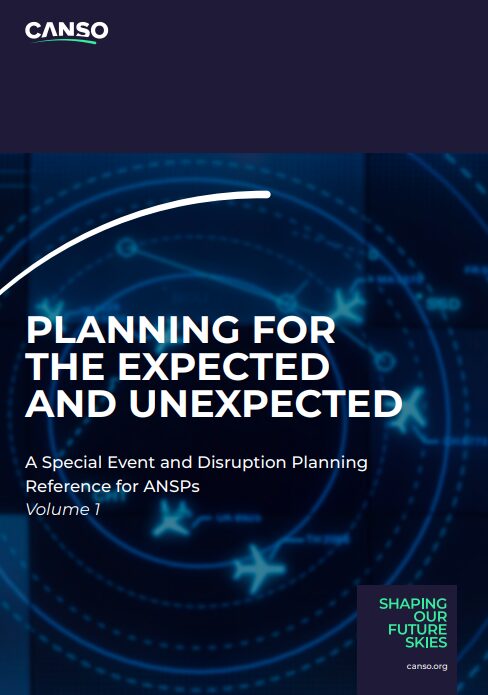
CANSO has published a document that covers these use cases and many more and extrapolates lessons learned and recommended practices.
Yesterday at Airspace world
Welcome intro lorem ipsum dolor sit amet, consec tetuer adipiscing elit, sed diam nonummy nibh euismod tincidunt ut laoreet dolore magna aliquam erat volutpat. Ut wisi enim ad minim veniam, quis nostrud exerci tation ullamcorper suscipit lobortis nisl ut aliquip.
Advertisement
20.03.2024
NAV CANADA joins the iTEC Alliance to foster more efficient and sustainable aviation
20.03.2024
Getting ready for cybersecurity regulations
20.03.2024
Preparing for new airspace users
20.03.2024
On the road to virtualisation
20.03.2024
FREQUENTIS X10 prepares Luxembourg Airport for future-ready voice communications
20.03.2024
Leidos establishes Air Traffic Management Center of Excellence in Indo-Pacific Region
20.03.2024
New competition for airspace means new rules
20.03.2024
The Urban Air Traffic Management Concept
20.03.2024
SkeyDrone honored at Air Traffic Management Awards 2023 for Drone Detection solution
20.03.2024
EagleShield – CUAS for Airports- UAS fast detection & identification a must
20.03.2024
GoDrone 2.0 – Drone Flight Planning App gets a new look!
20.03.2024
SeRo Systems awarded EUROCONTROL contract for1030/1090 MHz data collection service
20.03.2024
Faster drone flight approvals with FREQUENTIS automated risk assessment tool in Lithuania
20.03.2024
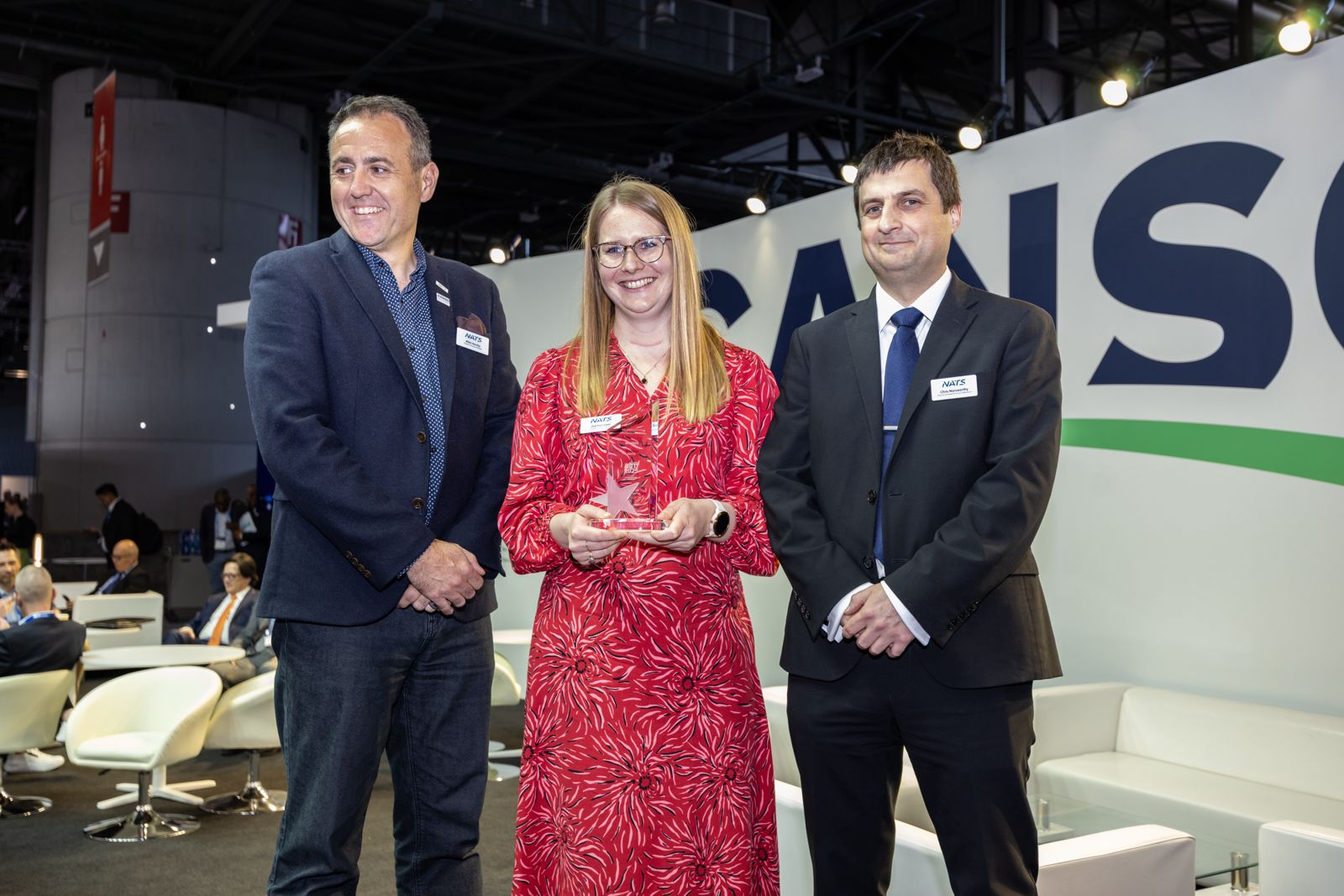
NATS crowned a winner at the prestigious Air Traffic Management Awards
20.03.2024
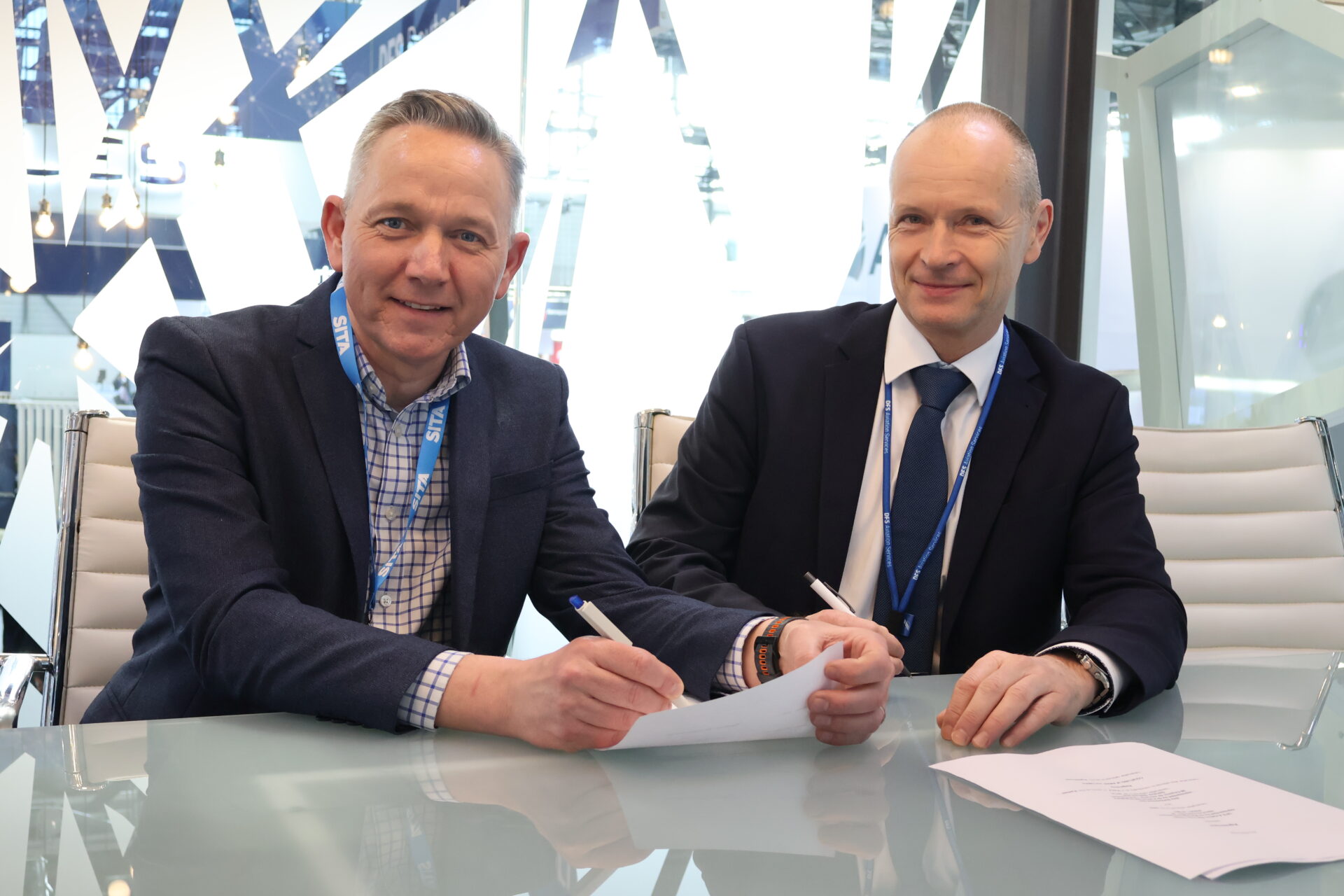
DFS Aviation Services and SITA revolutionize Air Traffic Management with new AMAN/DMAN solution
20.03.2024
Faster drone flight approvals with FREQUENTIS automated risk assessment tool in Lithuania
20.03.2024
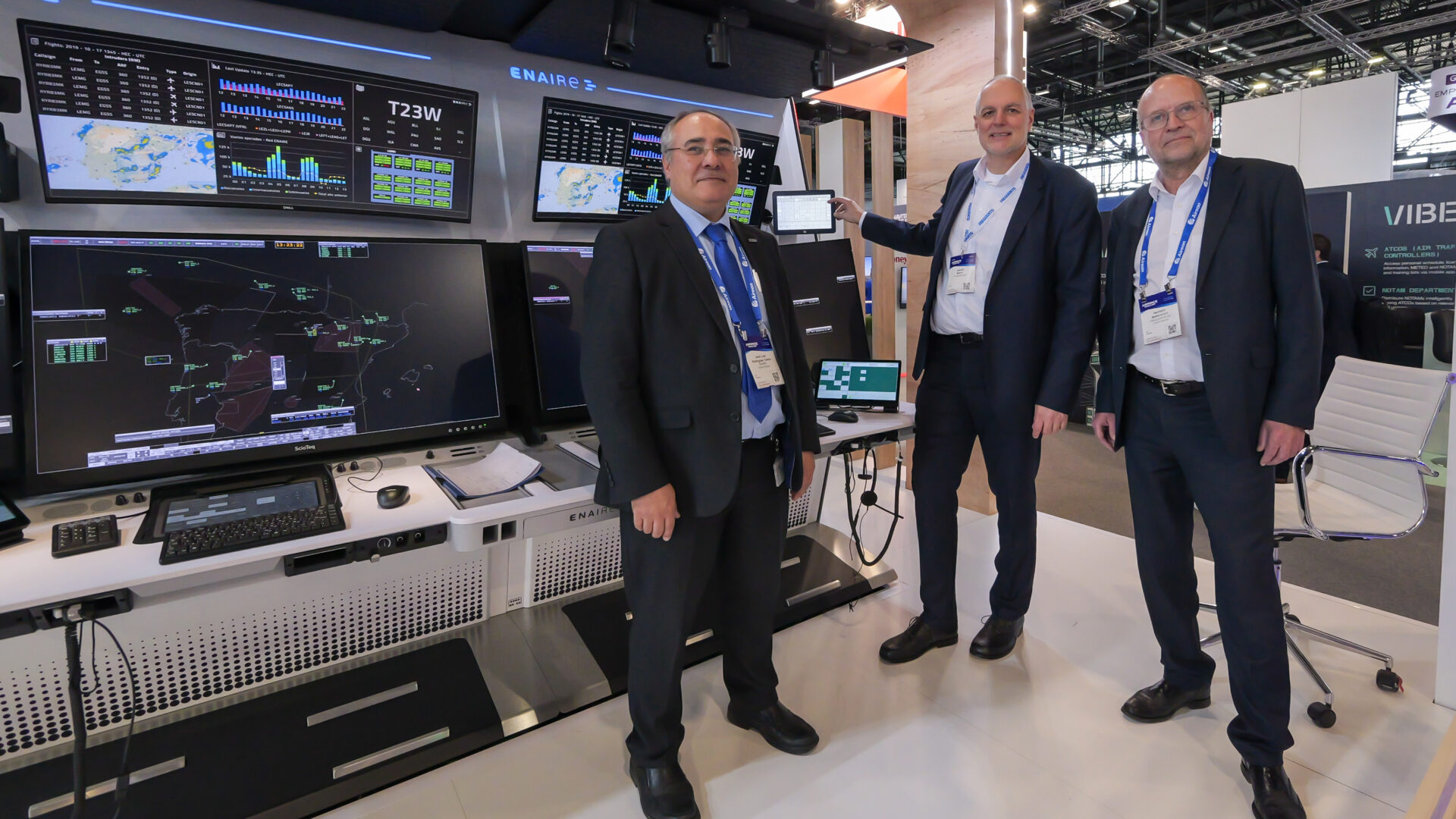
Spanish ENAIRE extends FREQUENTIS contingency communication and maintenance project for up to 12 years
20.03.2024
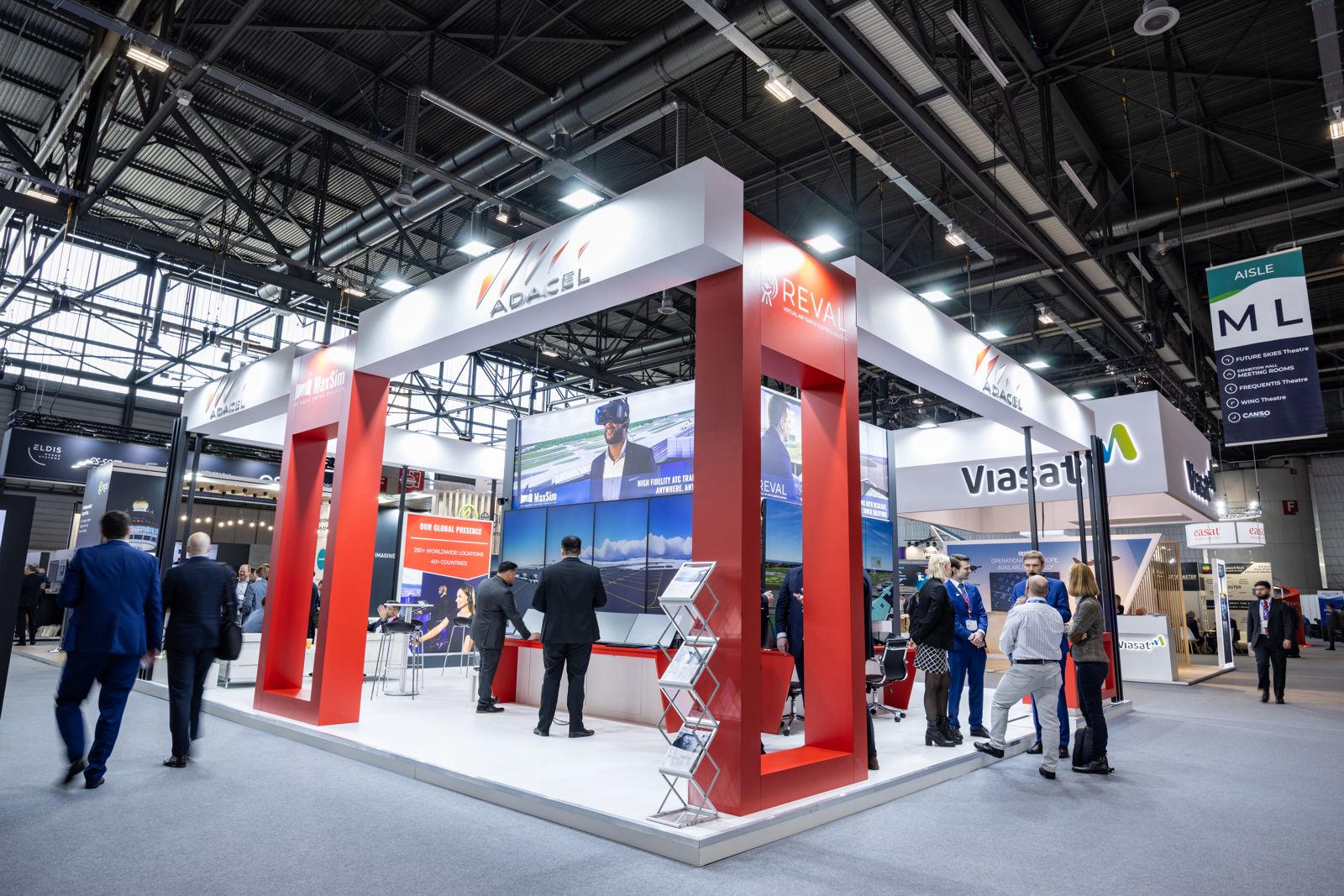
Adacel awarded new FAA contract for TSS System Software and Support
20.03.2024
People are our strength
20.03.2024
Reflections on a super Tuesday
20.03.2024
Don’t waste a Wednesday at Airspace World
Airspace world Today
Igniting passion for aviation
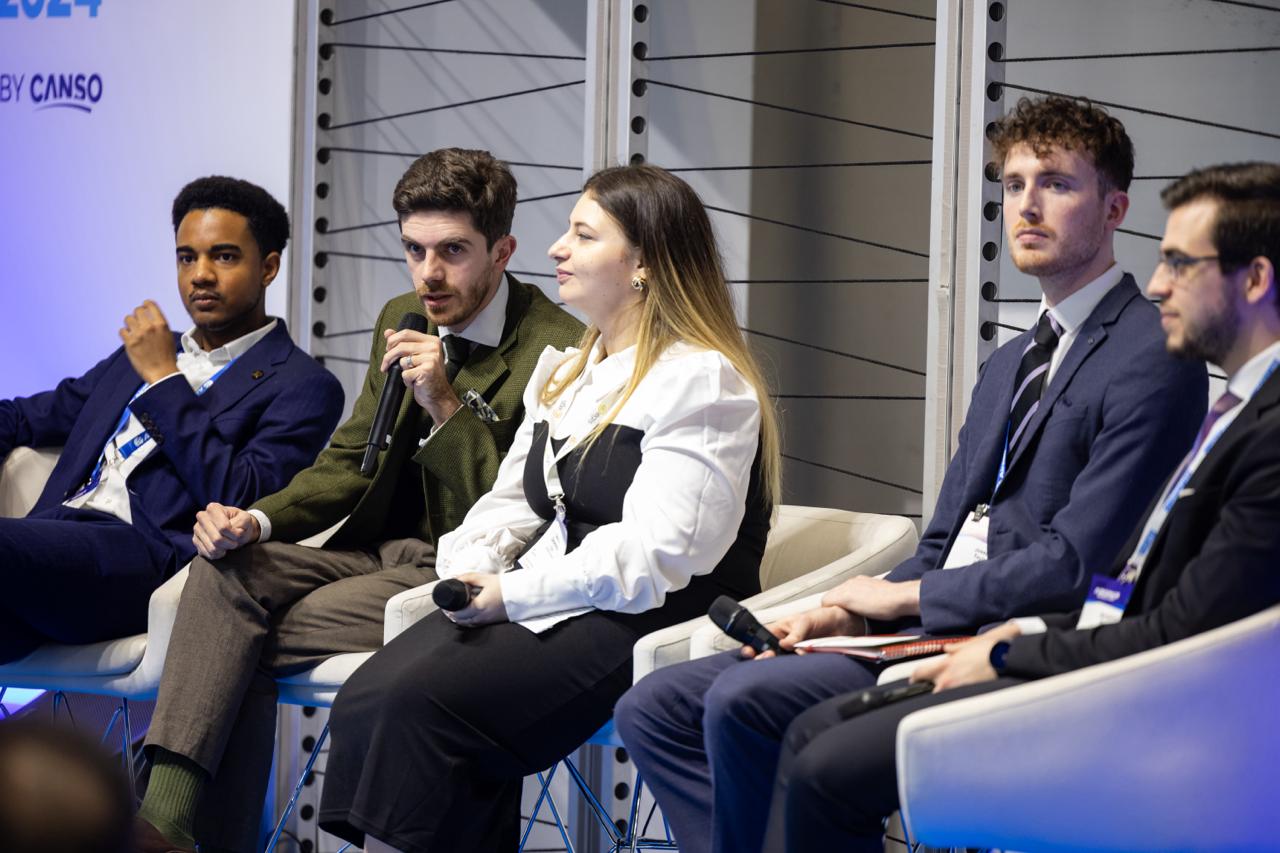
The Future Skies: Tomorrow’s Voices initiative had a huge impact on the final day of Airspace World. Across a breakfast and multiple sessions, some key points in the attraction and retention of young professionals were highlighted, some of which are not always considered.
A hybrid environment has pros and cons, for example. For the younger generation, it is seen as a positive, providing not only work-life flexibility but also the opportunity to speak up. The virtual environment can enable a confidence that is sometimes missing in the physical world with bigger, older voices dominating conversations.
But from the point of view of leadership however, a hybrid environment can make it difficult to create the right culture and to fully understand the needs of individuals, which are more apparent when working side-by-side in an office.
Another concept very rarely at the front of mind is reverse mentorship – where the younger generation share their insights and inspire leaders. The concept is attributed to Jack Welch, the famous former boss of General Electric. Essentially, young professionals are more attuned to the capabilities and promise of new technologies and procedures and have a stronger affiliation with future plans. The process could add tremendous value to an organisation, as could the impact of healthy equality and diversity policies. A CANSO/Firstfruits survey showed, for example, that gender imbalance is perceived as a health and wellbeing issue rather than pay, and 75 per cent agree that their organisation is an inclusive place to work.
The CANSO/Firstfruits survey highlighted five factors in attraction and retention:
Support for health and wellbeing
Inclusivity and diversity
Meaningfulness of work
Reliable and supportive people
Total compensation
Cross-referencing the responses it was clear that, in terms of attraction, passion for the sector counts more than money. This will be a challenge for air traffic management (ATM), often termed “the invisible highway”. People walk through airports and fly on aircraft, but the orchestrator of air traffic connectivity, ATM, can go unnoticed.
The importance of diversity in recruitment rounded out the conversations. One tip is to focus on the strength of people as this will naturally lead to diversity. Different backgrounds have different abilities and so pursuing diversity will inevitably lead to a stronger organisation.
The aim should be to build young, diverse teams, get them to work together and then enjoy the positive results.
NAV CANADA joins the iTEC Alliance to foster more efficient and sustainable aviation
iTEC, one of the Single European Sky pillars, will become a global alliance striving to improve air traffic management.
NAV CANADA, which manages the second-largest airspace in the world, will adopt the iTEC SkyNex system, which is being deployed in some of the world’s most complex and busiest skies, including those of Germany, Spain, the United Kingdom, the Netherlands, Norway, Poland, and Lithuania. With this Alliance, the partners of iTEC manage an airspace covering 26 million square kilometers.
With NAV CANADA’s entry into the Alliance, the iTEC SkyNex system will be extended to a total of 27 control centers in eight countries to provide a common technology that supports more sustainable aviation with fewer emissions.
Aircraft will be able to cross half of the globe with iTEC SkyNex as the system managing their flights
NAV CANADA is joining the iTEC Alliance and gives further momentum to an initiative that brings together some of the world’s leading air navigation service providers. With this important partnership, iTEC has reached beyond the European borders for the first time and continues its cooperative venture to create a more efficient and environment-friendly generation of air traffic management systems.
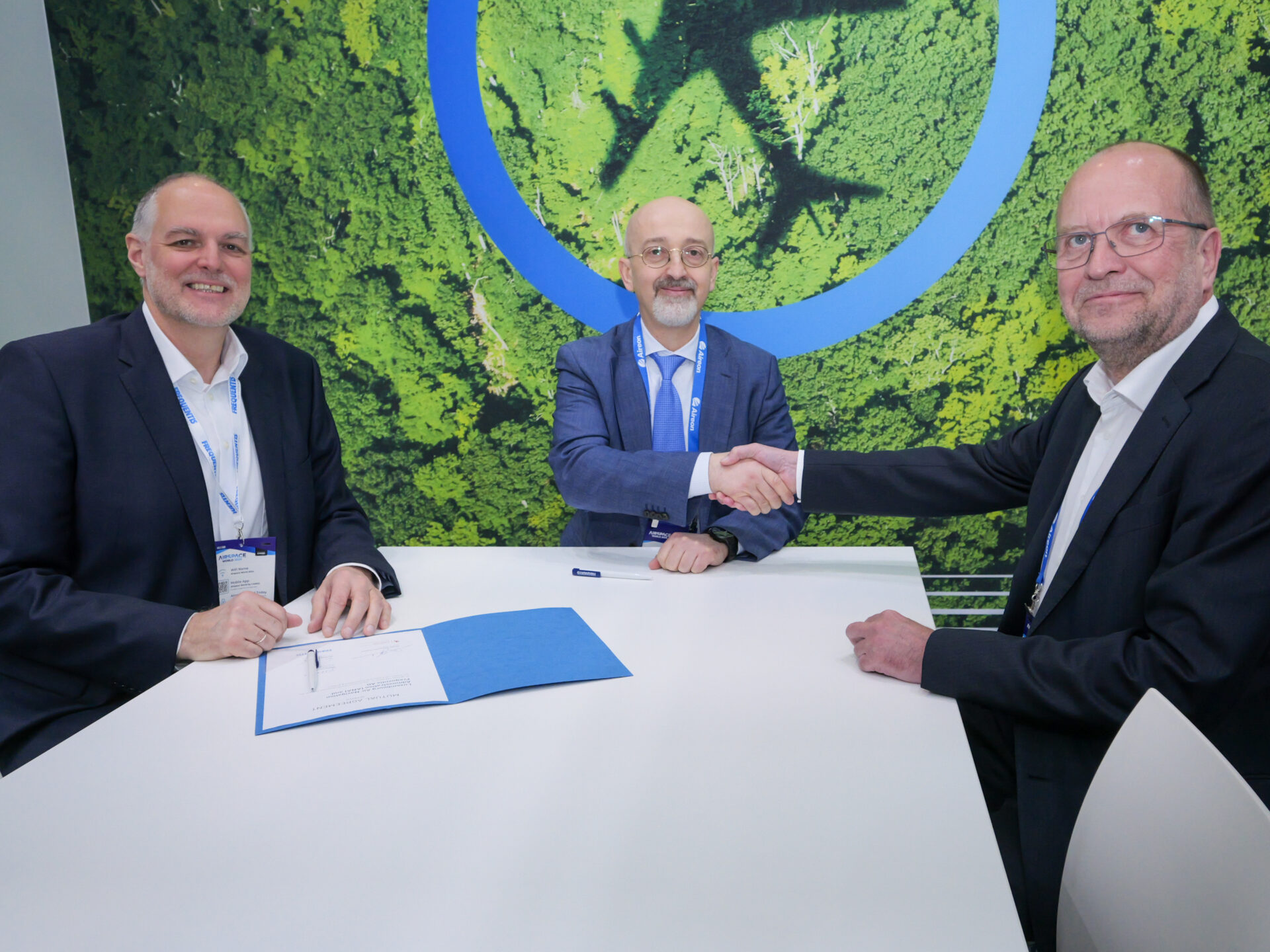
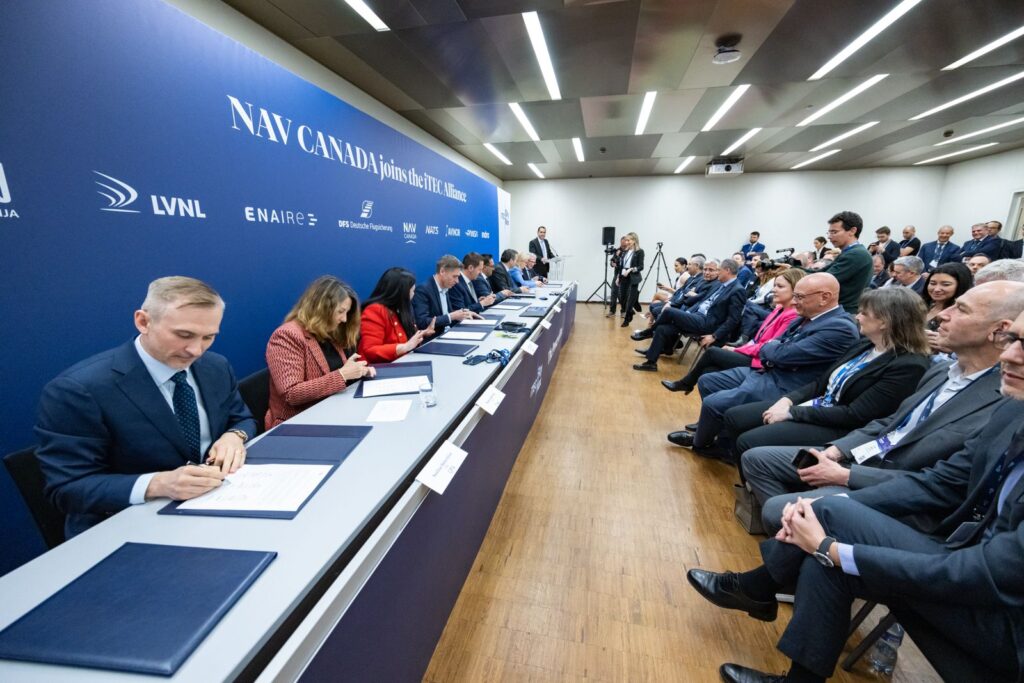
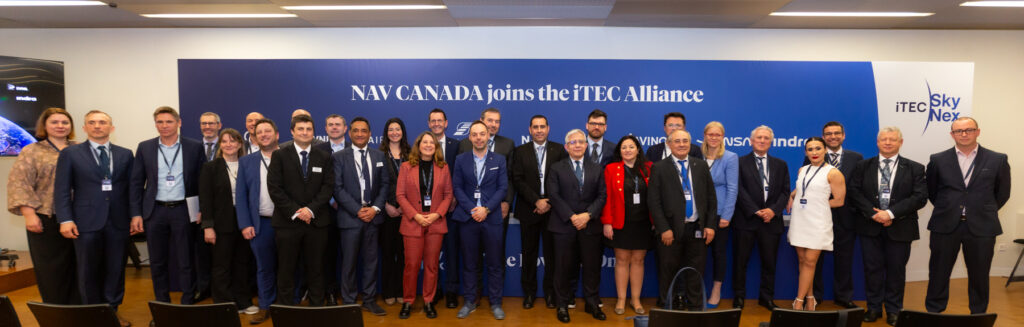
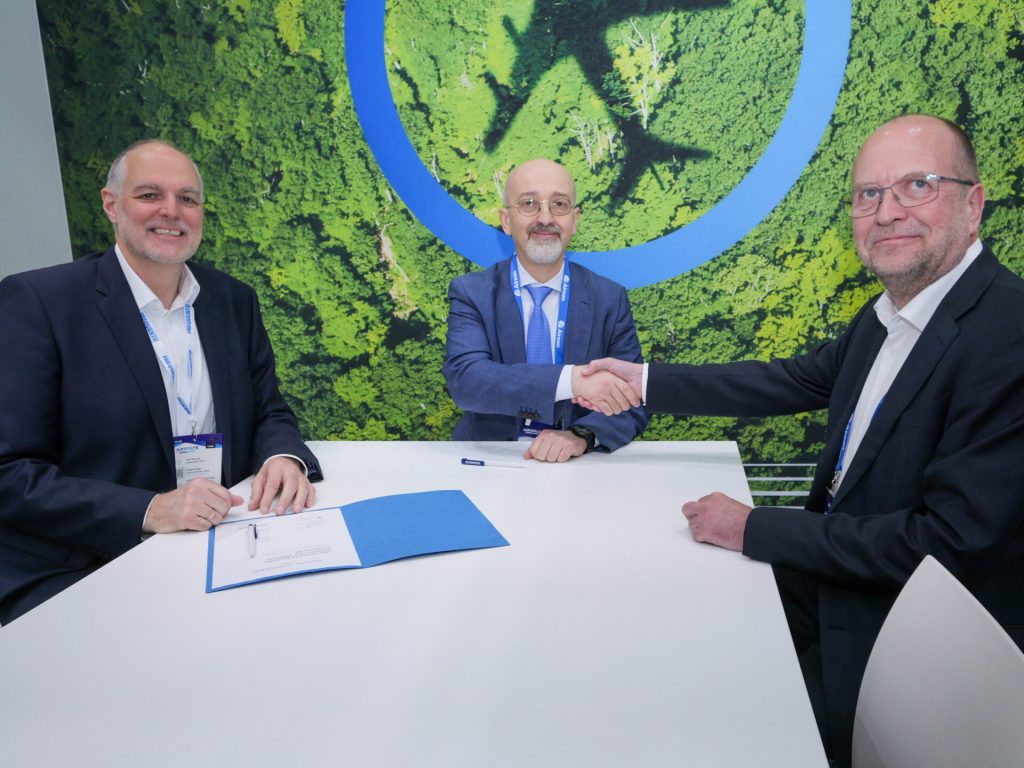
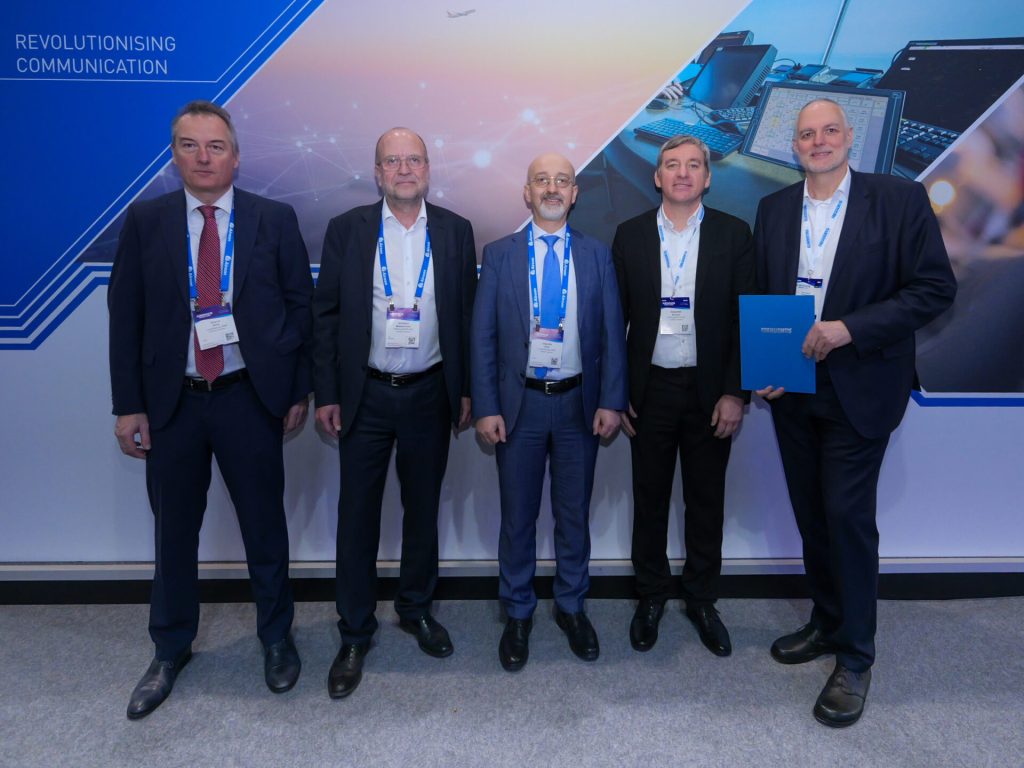
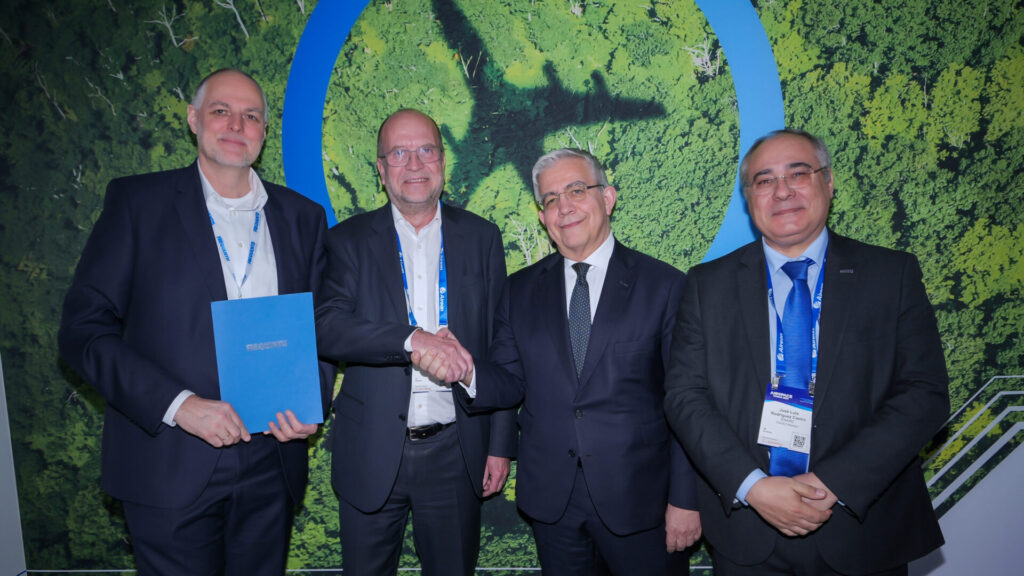
The signing took place today at the Airspace World event in Geneva which has brought together some of the main players in air traffic management ecosystem. Mark Cooper, Vice-President and Chief Technology and Information Officer on behalf of NAV CANADA, and the main representatives of the iTEC Alliance, Dirk Mahns, DFS COO and Chairman of iTEC Board; Kuldeep Gharatya, NATS Technical Services Director; Laura Garcés, ENAIRE Deputy Director ANS; Jan-Gunnar Pedersen, Avinor ANS CEO; Magdalena Jaworska-Maćkowiak, PANSA President; Marlou Banning, LVNL CFO; Saulius Batavičius, Oro Navigacija CEO; and Javier Ruano, Indra’s ATM General Director, signed the agreement.
With this settlement, cooperation between Europe and North America will be reinforced, and global air traffic will reach new levels of efficiency thanks to a more collaborative management. This partnership also brings the possibility of operating transoceanic flights using the same technology from start to finish, thereby facilitating smoother traffic management across both sides of the world’s busiest oceanic areas.
The joining of NAV CANADA, who plays a unique and critical role in managing the second-largest airspace in the world, constitutes a significant advancement for the Alliance—expanding its partnered airspace from 8 million to over 26 million square kilometres and supporting more than 12 million flights from 27 control centres each year. Aircraft will be able to cross almost half of the globe with iTEC SkyNex as the system managing their flights.
iTEC SkyNex will facilitate the introduction of Trajectory-Based Operations (TBO) into Canada, steer air traffic management towards a strategic approach and provide a more comprehensive view of the flight from take-off to landing. This new technology can accurately calculate trajectories and manage the progress of flights over a broader horizon, allowing for improved planning and greater efficiency. The system will increase efficiency, provide greater data accuracy, optimize flight paths and resources, reduce delays and CO2 emissions, and cut down costs significantly.
With the incorporation of NAV CANADA, the alliance will also acquire a partner that will contribute to evolving the iTEC SkyNex system and speeding up the introduction of new technologies, concepts and ever more sophisticated functions, sharing costs and know-how.
“We are delighted to be the first non-European ANSP to join the iTEC Alliance. Founded on the spirit of collaboration, NAV CANADA is proud to now be part of this partnership. A better future is ahead of us with iTEC SkyNex; we are now in a position to achieve goals that were previously unimaginable and build towards more sustainable skies,” said Raymond G. Bohn, President and CEO, NAV CANADA.
Dirk Mahns, DFS COO and Chairman of the iTEC Board, stated that “NAV CANADA’s entry into the alliance constitutes a significant milestone and highlights the fact that we have a highly advanced technology and a spirit of collaboration that are delivering tangible results and encouraging interoperability between air navigation service providers, a key aspect to transforming aviation and managing flights more intelligently and efficiently”.
Getting ready for cybersecurity regulations
Francesca Popescu and Yann Berger from Airbus explored Part-IS, a European Aviation Safety Agency (EASA) initiative that introduces requirements for the management of security risks that could affect information and communication technology systems and data used for civil aviation purposes.
Lock on the converging point on a circuit, security concept
Presenting at the Indra Theatre, Popescu and Berger gave an in-depth of analysis of what is technically Regulation 2023/203, noting it will align with the US Federal Aviation Administration requirements and is broader in applicability than many EASA regulations.
They pointed out that Part-IS – which will come into effect from October 2025 – is far more than a requirement for an Information Security Management System (ISMS) and should be studied carefully.
Berger said the goal should be to go beyond compliance. An ISMS is based on the idea of continuous improvement and so there will doubtless be additional requirements in future.
Indeed, he noted the industry must ultimately aim towards integrated risk management where physical safety meets cybersecurity. Organisations affected should perform a gap assessment and then define an implementation strategy to overcome any shortcomings.
In a wide-ranging discussion, the differences between risk management in the air and on the ground were also highlighted, as each is exposed to distinct types of attack and risk.
Aircraft, for example, don’t have cyber specialists on board and cannot immediately adjust systems. The aim therefore is to ensure prevention – attackers must not be able to get at aircraft systems inflight.
On the ground, there are not such clearly defined boundaries, and the vulnerabilities are far greater. Because it is impossible to protect against every potential attack, a combination of prevention, detection and reaction is the most viable way forward. Organisations should also have a good reporting system so that authorities and relevant third parties can anticipate an attack or react as necessary.
Berger concluded that the aim must always be an end-to-end approach that ensures safety and security risks are minimised.
Preparing for new airspace users
Richard Ellis from NATS gave the audience a glimpse of the future with his presentation on new airspace users at the Future Skies Theatre.
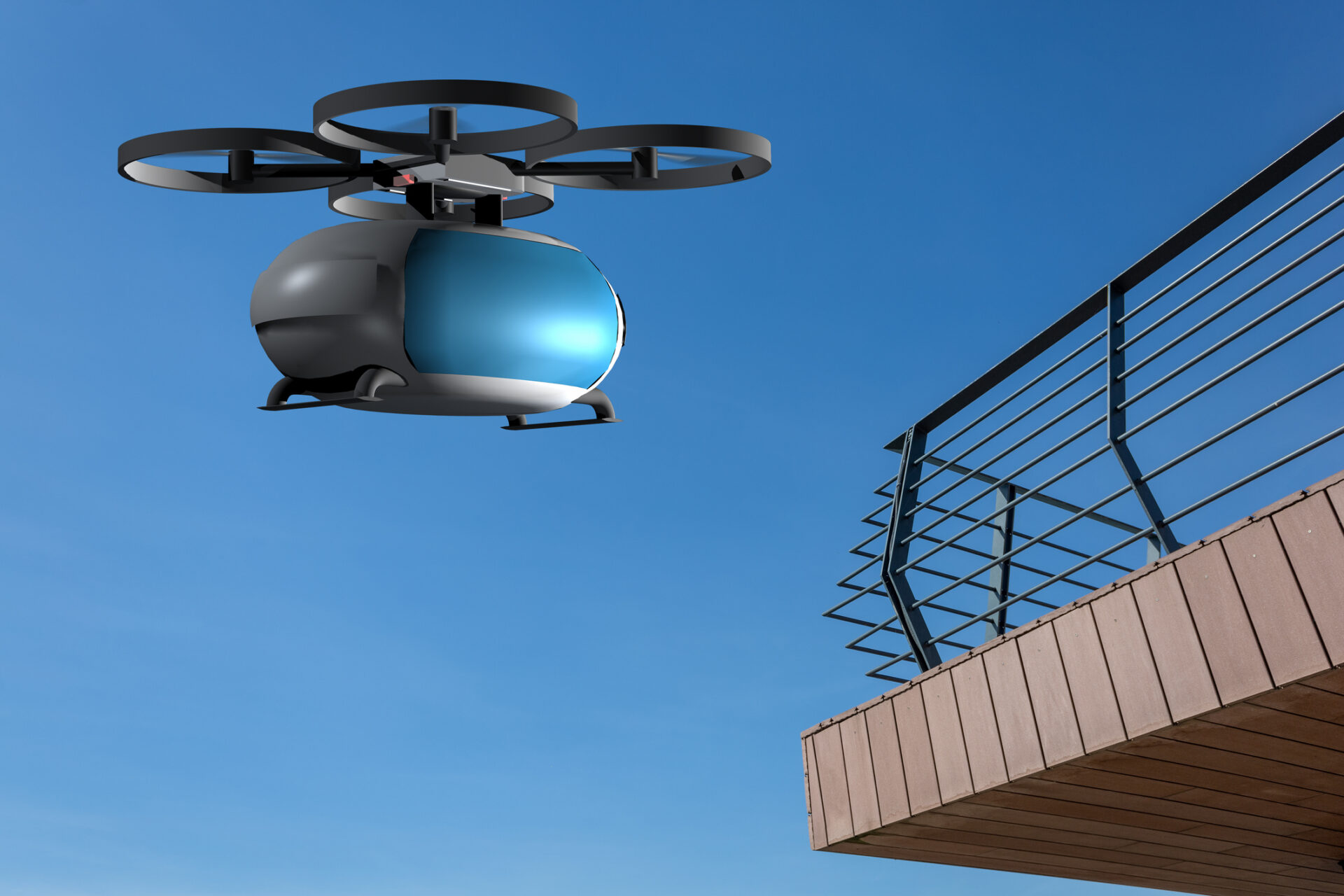
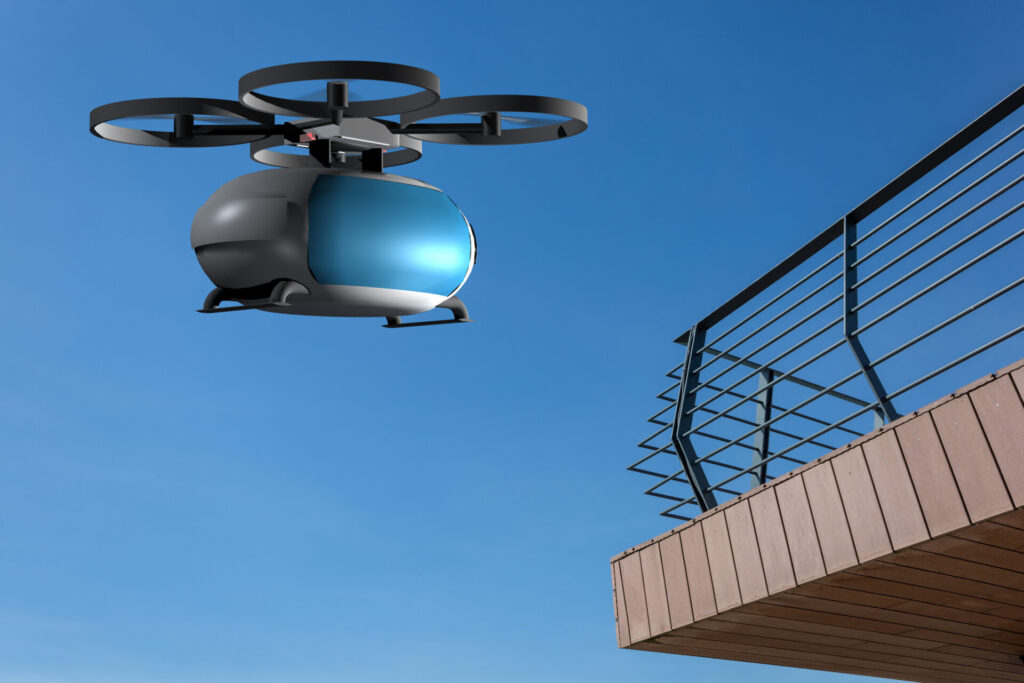
3d illustration of transportation drone flying
Ellis explained that the skies of 2034 will be very different from those of today. The speed of development is difficult to ascertain but there is little doubt that disruptive technologies and new airspace entrants will transform the industry.
He highlighted a number of areas that have already begun changing or are at least in the planning stage:
There will be a modal shift in transportation. Although human pilots may initially be involved in some advanced air mobility (AAM) flights, eventually uncrewed operations at scale will be routine.
Airspace will be integrated from space to ground. Ellis emphasised that it cannot only be about what is happening below 500ft but rather must involve a more holistic approach.
Regulators must embark on the same journey as the industry and enable different flight regulations, including digital instrument Flight Rules (IFR). Ellis suggested that AAM will use visual flight rules (VFR), then move to IFR before digital IFR becomes commonplace.
Infrastructure will become increasingly complex and abundant with vertiports springing up across cities. The number and location of vertiports will be an important factor in the concept of operations (CONOPS) as most new airspace users will rely on battery power and so managing their flight times and capabilities will be critical to safety.
Air navigation service providers (ANSPs) will need to accelerate and complete their digitalisation work to integrate all airspace users safely and seamlessly.
Ellis said there are several difficult challenges and questions ahead, such as determining the capacity needed since many areas will potentially go from hundreds of flights a day to tens of thousands.
He called for ANSPs to de-risk as much as possible. Possible risk mitigation strategies include validating the CONOPS and business cases at the earliest opportunity, providing regulators with the requisite data to help them make informed separation standard rules, and generating visualisations of future airspace.
On the road to virtualisation
A SESAR walking tour on virtualisation took in developments on display at the DLR, Frequentis and Indra stands.
SESAR’s Adriano Acanfora – the host of the tour – set the scene by explaining that the ultimate goal is a digital European sky that is efficient, resilient and sustainable. An important step on this path is the creation of virtual control centres that decouple the technology from the air traffic controller (ATCO).
At the Indra stand, it was explained the Virtual Centre with Triangle Architecture and Cyber Resilience (VITACTY) project and its involvement in iSNAP, which is the name for the technological evolution of the iTEC SkyNex platform.
VITACY will separate and provide data related to specific functionalities, such as arrival management (AMAN), time-based separation (TBS) and conflict detection. Validation tests in AMAN and TBS are ongoing and anticipated benefits include cost savings through the greater rationalisation of services. VITACY will also open the door for competition in data provision.
iSNAP, meanwhile, will advance iTEC communications to a more robust model, updating the ATM system supervision and data recording functions. The calculated trajectory of each flight plan will also be improved thanks to information received directly from the aircraft.
At Frequentis, it was explained that moving the technology into a data centre away from the controller has enormous advantages for resilience. There could be a second or third operational centre, for example, and even a second data centre. Aside from strengthening contingency plans this enables updates to be easily undertaken. The theory is that, ultimately, control of an airspace sector can be performed from anywhere in Europe, realising the digital sky dream.
The final element in this idea was described at the DLR stand. The Increased Flexibility of ATCO Validations (IFAV3) project will fill an important gap in the virtualisation concept. As it stands, ATCOs are endorsed on a specific sector following months of on-the-job training, which is expensive in terms of time and money and limits operational agility.
The idea is that through support tools, procedural changes, competency-based training, smart sector grouping and automation, ATCOs can be endorsed for multiple sectors. For example, tools might include a heat map that predicts future traffic density while procedural changes will move towards standardisation. User cases will also involve remote towers.
ATCOs that can move across sectors will complement the idea of virtual centres. It will make better use of existing capacity, improve resilience, enhance rostering possibilities and lower training costs.
Advertisement
FREQUENTIS X10 prepares Luxembourg Airport for future-ready voice communications
Frequentis X10 voice communication system (VCS) to modernise tower and approach infrastructure for air/ground and ground/ground communications
X10 VCS provides a market-leading approach to cyber security and the most intuitive Human Machine Interface (HMI) for the air traffic controllers
Luxembourg Air Navigation Administration (ANA) has selected the Frequentis X10 VCS to modernise the voice communication system infrastructure for its tower control and approach centre at Luxembourg Airport.
X10 VCS is a fully software-based and air traffic management (ATM)-grade IT VCS, suited for both virtualised and conventional airspace. The offered solution provides all essential features for reliable air/ground and ground/ground communications. It provides the resilience and cyber security required of a system built for safety-critical ATM, with a unique multi-redundancy design, as well as the ability to adapt capacity depending on demand.
“The X10 is our next-generation VCS system, designed with operational agility and a future-proof update strategy that will ensure business continuity throughout ATM operations,” says Hannu Juurakko, Frequentis Executive Vice President ATM Civil and Chairman of the ATM Executive Team. “Having worked with Luxembourg ANA for over 20 years, we are dedicated to supporting them with the changing demands of their airspace, providing the most modern VCS on the market with a clear path to a future unified communication solution.”
Frequentis X10 VCS adds value to every air traffic control operation, making it particularly strong from the air traffic controllers’ perspective. The loading of roles and the handling of scenarios are easy and intuitive, without any disruption to service provision. The advanced user functions, including sensitive and gesture-based operation, ensure any clutter on the operator panel is eliminated.
“As a long-term customer of Frequentis for many decades, we trust their solutions implicitly and are looking forward to this VCS modernisation to support our airspace with managing increasing demands, as well as preparing us for future requirements and ensuring the highest level of safety for our customers,” says Claudio Clori, Director, Administration of Air Navigation.
Leidos establishes Air Traffic Management Center of Excellence in Indo-Pacific Region
Leidos, a FORTUNE® 500 innovation company, has announced the establishment of an Air Traffic Management (ATM) Research and Collaboration Center in Singapore to keep pace with the rapidly evolving demands of global aviation. This operational expansion is intended to deliver safe and efficient solutions to the Civil Aviation Authority of Singapore (CAAS) and Air Navigation Service Providers in the Indo-Pacific region.
"This expansion represents the next step in delivering the highest level of airspace services to the Indo-Pacific region,” said Ed Sayadian, Leidos senior vice president, transportation solutions. “We are excited to grow our regional team with innovative thinkers who will engage with a broad base of global air transportation stakeholders to advance critical air traffic management capabilities.”
Axel Bensch, pictured below, has been appointed to lead operations in the region as well as the new center, bringing with him more than 25 years of commercial aviation and ATM expertise. Under his leadership, the Center will collaborate with regional universities, research institutes and industry partners to augment international air traffic solutions and enhance operations in the region leveraging Leidos' 65-year history of supporting air navigation service providers and their mission.
The Center will also provide collaborative research and development for advanced capabilities in trajectory-based operations and international air traffic flow management through Skyline-XTM – Leidos’ comprehensive air traffic management platform.
For more on Leidos’ extensive solutions in air traffic management, visit www.leidos.com/ATM.
New competition for airspace means new rules
Introduction
Competition for airspace around the world is fiercer than ever and air traffic is becoming increasingly complex to manage, as the aviation industry continues to find new ways to use the air domain in service of human endeavour.
At the same time as regular use of the airspace below 500 ft is increasing (think drones and passenger carrying air taxi / urban air mobility operations), non-aircraft (both physical and non-physical) airspace users are asserting their own right to use, affect or occupy a precious piece of the sky, putting even more pressure on the systems we need to ensure the safe, efficient and regular use of airspace.
The new competition
In the past, the airspace below 500 ft has been the domain of the specially trained who are adept at avoiding the ground and myriad of other hazards that concentrate just above the intersection of earth and sky. Aerial application and firefighting, search and rescue / aeromedical activities and low-level military operations are just some of the activities that necessarily occur in this hazardous environment. It is also where all aircraft are exposed to the highest risk of an accident – during take-off and landing.
In recent years this airspace has become increasingly occupied by millions of drones in the pursuit of leisure, commerce, agriculture, research, survey, medical and sometimes other more nefarious activities.
Meanwhile, the airspace above 500 ft, which has traditionally been the preserve of aircraft and the occasional tall structure in more developed areas, will soon be intruded upon by millions of wind turbines and supporting meteorological monitoring masts in areas close to and remote from built up areas, both on and offshore, as the world transitions from fossil fuels to renewable energy in pursuit of net zero carbon emissions. These tall structures, extending towards 1000 ft high and beyond, occupy airspace and intrude upon flight paths that are relatively undefended from potentially adverse impacts.
And now, with the imminent introduction of commercial, passenger carrying, air taxi / urban air mobility operations which will operate predominantly in the lower levels of airspace including below 500 ft, the global airspace and air traffic management sector is striving to establish a safe and efficient operating system that will accommodate these new users within a regulatory framework that is already struggling to keep up with technological advancements.
Changing the rules
Changing the rules will involve all elements of the air traffic management system, including separation standards, air traffic control, flight path design and surveillance systems. We’ll also need to improve airspace protection arrangements.
Separation standards. The commercial success of air taxi / urban air mobility operations relies in part on the value proposition that they will be able to get people from one place to another faster for roughly the same price as land (or sea) based transport options. To do this, they want to be able to fly between origin and destination without any delay. Given operations are likely to be conducted within or through controlled airspace with restrictive separation standards, the challenge is to achieve efficiency outcomes through reduced separation standards between these airspace users without compromising safety.
To do that we need to know with a high level of accuracy and certainty where each aircraft is, where it’s going, its planned flight path and operating parameters, and work out a way to enable these operations, dynamically and in real time.
Air traffic control. The traditional concept of a human air traffic controller managing a sector of airspace, monitoring and directing the various aircraft for which they are responsible as they move along their flight paths, supported by pre-programmed computer-based logic, will almost certainly persist for upper level and terminal airspace operations.
Low level airspace, though, will need a new approach to air traffic management – hence the brilliant and extensive work currently underway to develop and implement unmanned air traffic management (UTM) systems based on artificial intelligence that is supported by human monitoring and intervention.
New flight paths. Air taxis and other high frequency low level airspace users will also expect dedicated flight paths to be established, often within the most congested piece of the sky. The right to relatively unfettered occupation of certain parts of the airspace is being asserted as a fundamental requirement for the success of these future operations and is a real challenge to traditional airspace control arrangements.
Surveillance systems. Traditional aircraft surveillance systems are designed to be ground-mounted and look up, continuously searching for and attempting to interact with small aircraft specks as they traverse the skies above.
With aircraft equipped with appropriate onboard systems, cooperative interaction and satellite-based sensors, surveillance systems will be better able to look down and ‘see’ these aircraft at all levels from an even greater distance, providing better resolution of the airspace situation to airspace controllers, whether human or artificial.
Airspace protection. There will need to be more robust mechanisms to apportion and adjudicate on the rights of the various flying and non-flying airspace users, as taller structures and non-physical airspace users compete for parts of the sky towards and beyond 500 ft above the ground and more aircraft occupy the lower levels. An infringement of a flight path or obstacle protection surface can be resolved if the flight path or protection surface is modified, thereby preserving appropriate safety margins. But these changes almost always come with a compromise to efficient aircraft operations, and there is a lack of robust or universal guidance about how to effectively and fairly balance these competing interests.
Conclusion
Increased competition from aircraft and non-aircraft (physical and non-physical) for constrained low-level airspace means that we need new rules to ensure safe, efficient and regular aircraft operations while permitting desired development and technological advancements. While there is plenty of work to do, with the energy being directed to this task, the outcome is exciting and seems assured.
The Urban Air Traffic Management Concept
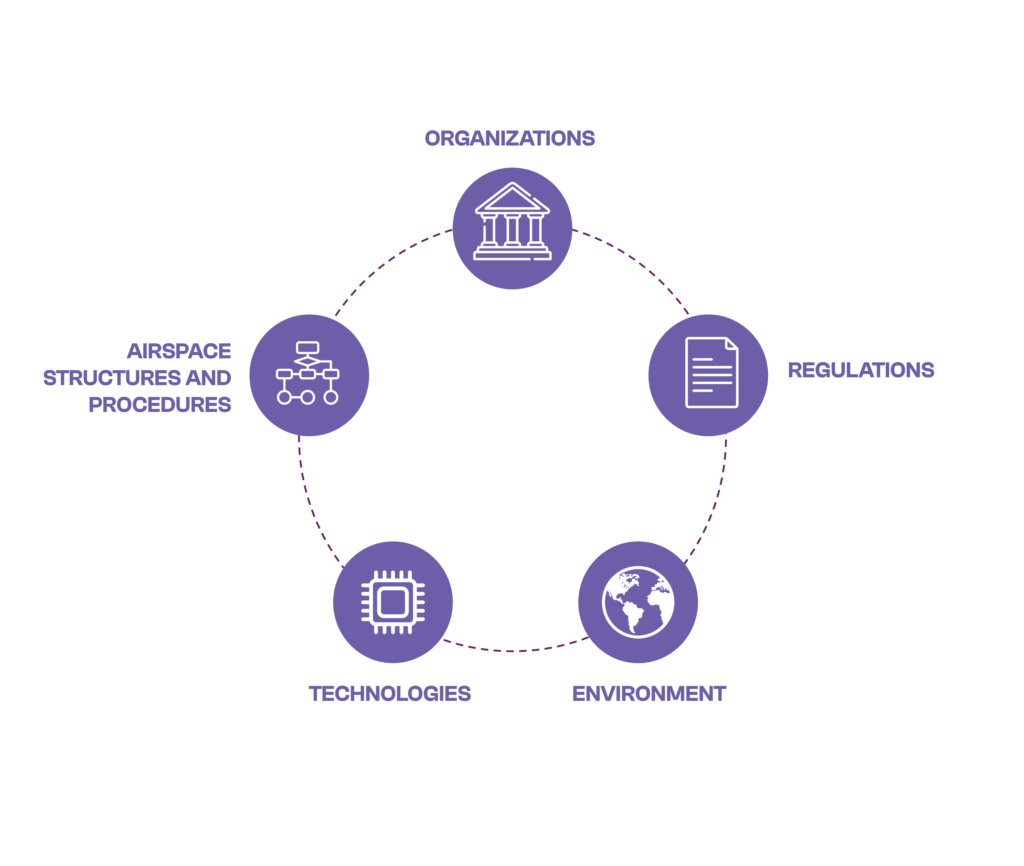
Urban ATM is the collection of systems and services to support the integration of all operations in the urban airspace environment, including Regulations, Organizations, Airspace Structures and Procedures, Technologies, and the Environment. The term “urban” is used to signify the area where new advanced high-integrity ATM services are likely to be required to support the integration of electric vertical take-off and landing (eVTOL) aircraft and drones.
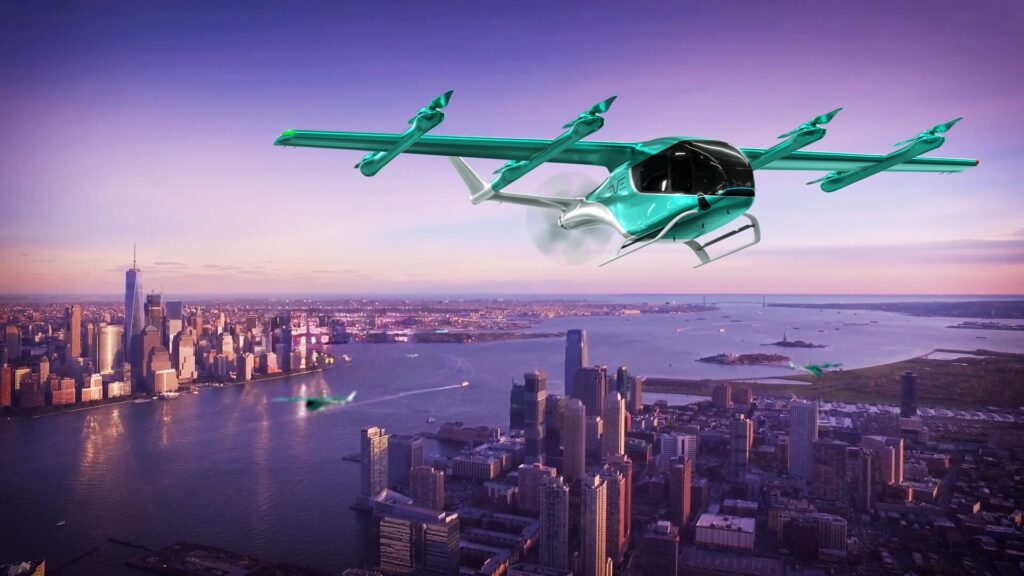
Given the need for eVTOLs to be integrated with other aircraft from initial operations, Eve believes that the introduction and evolution of this new type of aircraft will be the catalyst for a new approach to managing traffic in urban environments.
Urban ATM will support the integrated operation of initially piloted Urban Air Mobility (UAM) aircraft and other airspace users in low-level airspace, enabling the optimized performance and safety of UAM operations and providing a roadmap toward the integration of autonomous aircraft.
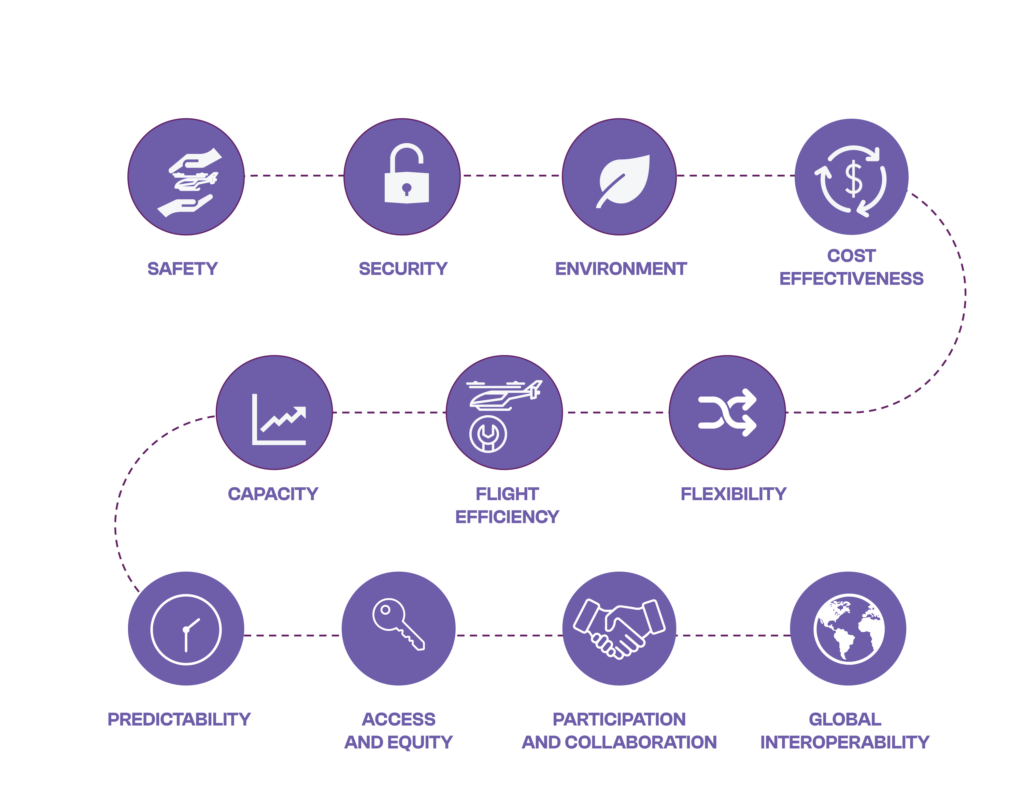
Optimizing the performance of operations is not limited to just separation services but will include consideration of all ICAO Key Performance Areas (Safety, Security, Environment, Cost Effectiveness, Capacity, Flight Efficiency, Flexibility, Predictability, Access & Equity, Participation & Collaboration and Global Interoperability).
Initial Urban ATM services may focus more on performance areas such as flight efficiency, flexibility, predictability, and participation and collaboration. Safety will be achieved through traditional ATM arrangements and pilots conducting operations under Visual Flight Rules (VFR).
Urban ATM services that enable the integration of all airspace users will differ from those required for UAS Traffic Management (UTM) in terms of functionality and level of integrity. They will support piloted, remotely piloted, and autonomous aircraft operations. Given their proximity, Urban ATM services will need to integrate with both traditional ATM and UTM services. It is expected that UTM services will continue to be utilized for segregated uncrewed aircraft systems operations (for example, in areas below 500 ft).
Eve sees the evolution of UAM operations occurring over several horizons, where different features for operations will take place.
Implementation of existing ATM concepts (e.g. VFR routes)
New vertiport and fleet operations planning, information sharing, flow management, and situational awareness Urban ATM solutions (provided by ANSPs or other parties)
Horizon 2 – UAM Scale
Expected deployment timeline: late 2020s
UAM aircraft operations where current ATM procedures and technologies are insufficient to support the demand for operations.
New ATM solutions will be needed to enable the UAM industry to scale
Horizon 3 – Integration of uncrewed passenger carrying aircraft
Expected deployment timeline: early to mid-2030s
A mix of piloted, remotely piloted and autonomous UAM aircraft operations with other airspace users
Integration of UTM and Urban ATM concepts
Tomorrow, we will introduce Eve’s work to develop technology solutions to support initial eVTOL operations.
For more information, visit us at the Atech stand F22
About the author: Rob Weaver is the Urban ATM Global Business Development Lead for Eve Air Mobility, the Embraer backed start-up dedicated to accelerating the global UAM ecosystem. He also leads Entry Into Service planning for Eve’s eVTOL aircraft in Australia.
Rob has worked with Embraer-X and Eve on new ATM concepts to support UAM since 2018. Previously he was Executive General Manager Safety, Environment & Assurance at Airservices Australia, where he was a member of the Executive for six years. He has also worked for the UK’s Air Navigation Service Provider and holds a PhD in safety critical systems from the University of York.
SkeyDrone honored at Air Traffic Management Awards 2023 for Drone Detection solution
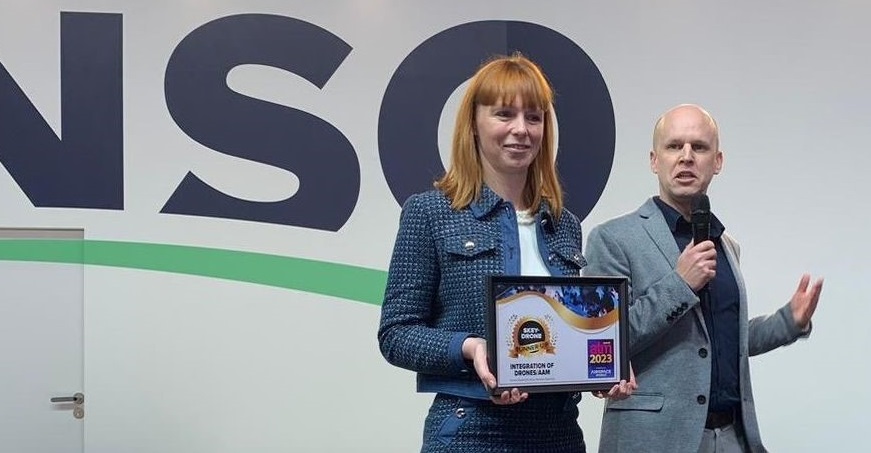
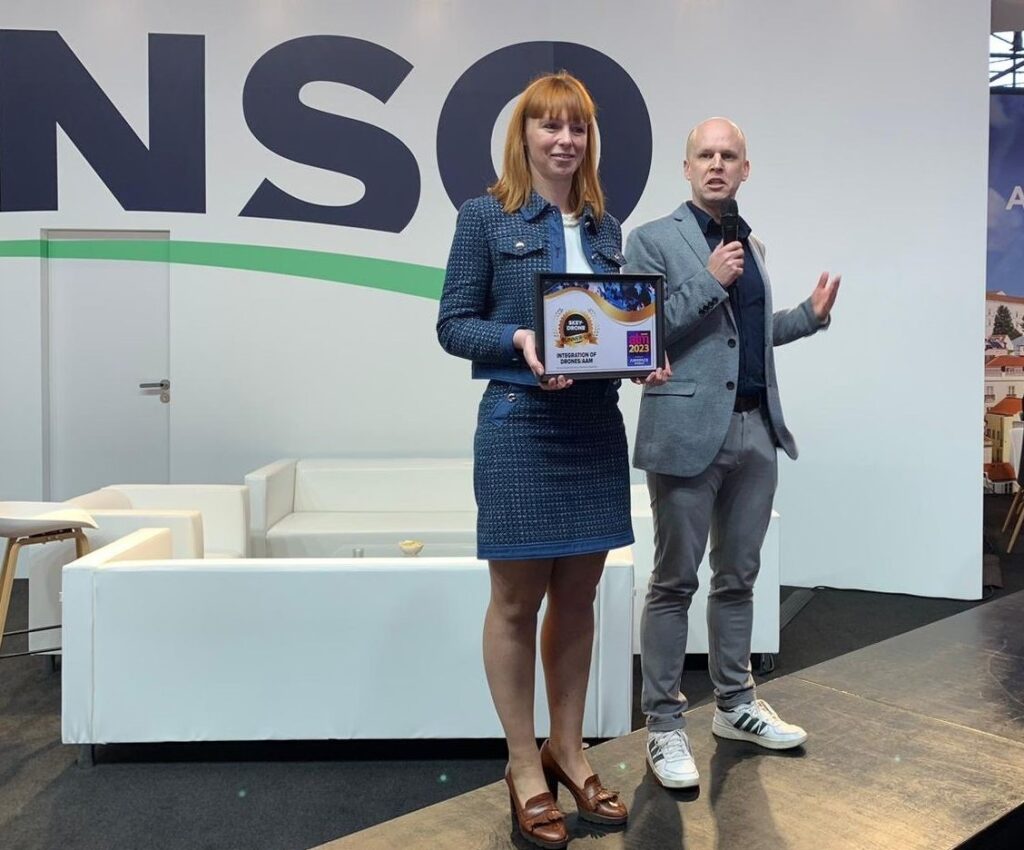
Geneva, March 20, 2024 –At Airspace World 2024 in Geneva, SkeyDrone has been honored with the runner-up award in the category “Integration of drones/AAM” with our Drone Detection as-a-Service solution. This recognition, presented by Air Traffic Management Magazine in collaboration with CANSO, highlights SkeyDrone's commitment to advancing drone technology in aviation.
The Air Traffic Management Awards aim to encourage pioneering concepts and acknowledge significant achievements by leaders, initiatives, and organisations in the aviation industry. This year, the "Integration of Drones/AAM" category saw a record number of entries, making the competition tougher than ever.
SkeyDrone’s award-winning Drone Detection as-a-Service solution boasts an exceptionally high detection rate and effectively distinguishes authorised drone operations from unauthorised drone activities. Since its successful deployment at events like Tomorrowland in 2023, where it helped confiscate 12 illegal drones, the solution has been adopted by many organisations safeguarding critical infrastructure.
Expressing pride in SkeyDrone's achievement, Hendrik-Jan Van Der Gucht, Managing Director of SkeyDrone, emphasized the company's unique position as the only startup recognized at the awards. "Winning this award among tough competition is a testament to the dedication of the SkeyDrone team. We're proud to be the only startup honored, showing our commitment to innovation in aviation."
note to the editors
Media requiring additional information can contact Nele Coghe, Head of Marketing at SkeyDrone via nco@skeydrone.aero and +32 473 76 90 16.
About SkeyDrone
SkeyDrone is a joint venture between the Belgian Air Navigation Service Provider skeyes and Brussels Airport Company. The company’s mission is to provide end-to-end solutions for business needs related to the use of uncrewed aircraft (drones). SkeyDrone offers solutions for lower airspace monitoring, management of and protection against drones for authorities and geo-zone managers, UTM/U-space & consultancy services for drone operators and business integration services for companies. Playing a pivotal role in the implementation of U-space in Belgium, SkeyDrone is on track to make history by becoming one of the first U-space service providers in Europe.
EagleShield – CUAS for Airports- UAS fast detection & identification a must
The increase in the number of drones flying around the world has been exponential. In less than a decade, drones have gone from an expensive technology available to a few, to a mainstream toy or capability within reach of anybody.
Knowing what is flying and where, be it collaborative or non-collaborative is a must. Unmanned aircraft systems (UAS) represent a significant threat for airports, airlines and, ultimately, air passengers worldwide.
A few incidents have already demonstrated how even just the presence of a drone near an airport’s glidepath – let alone a collision – can affect airport operations. Hours of closures, hundreds of delayed or cancelled flights, dissatisfied passengers, all incur considerable costs for both airlines and airports. Incidents that may also adversely affect reputation.
Yet, today radar technologies currently deployed at most airports around the world are not designed to deal with UAS, in particular micro (2kg) and mini (2-20kg) drones. These drones feature a very small Radar Cross Section (RCS) capable of flying at low altitudes, high speeds and unpredictable patterns, making them objects particularly difficult to detect.
No one sensor can tackle the UAS threat alone, especially as the menace from non-collaborative drones – that is, drones flying without transmitting any information allowing their identification – continues to increase.
The right combination according to airport needs lies in the ability to design a bespoke solution that can efficiently and effectively detect, identify and track any UAS.
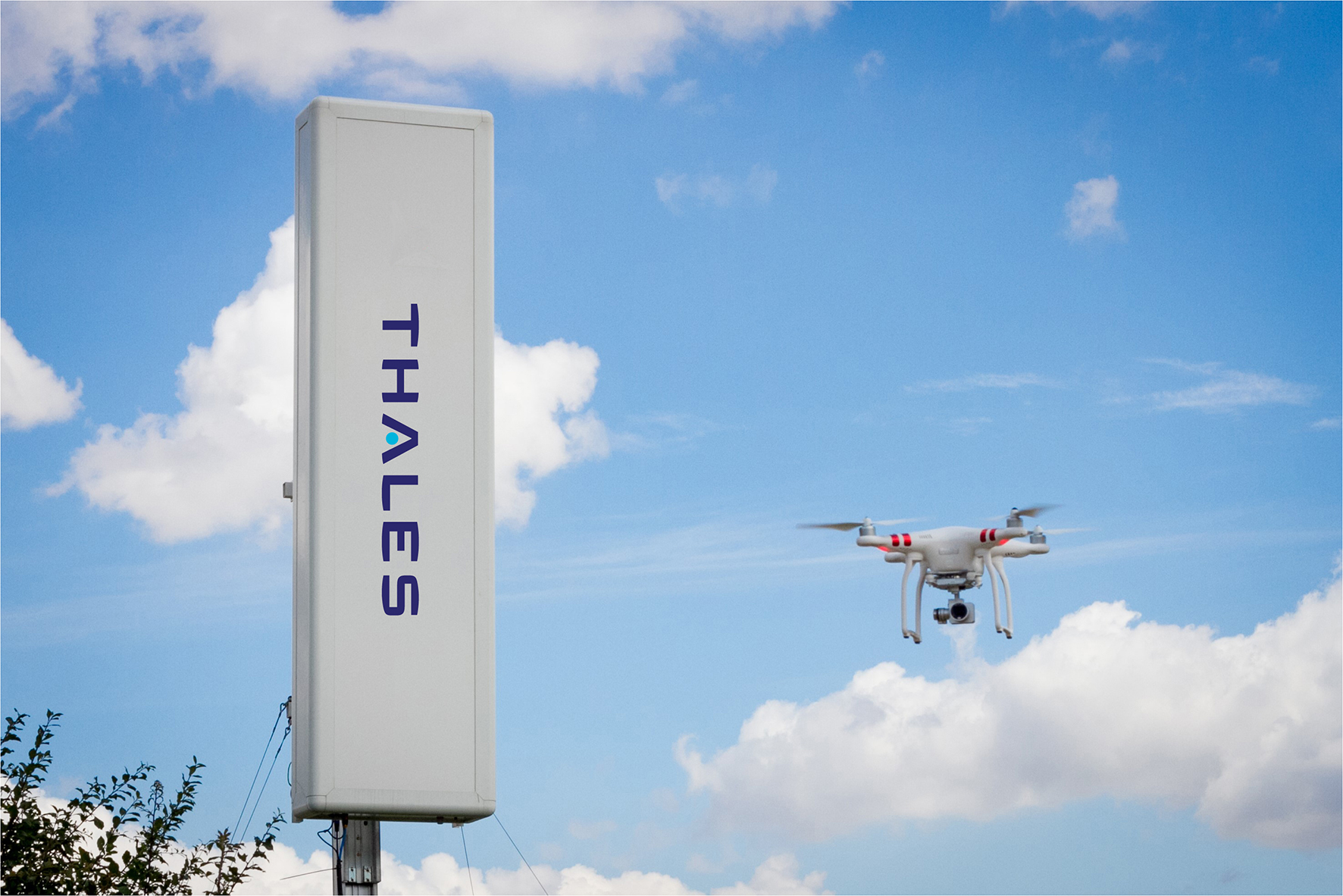
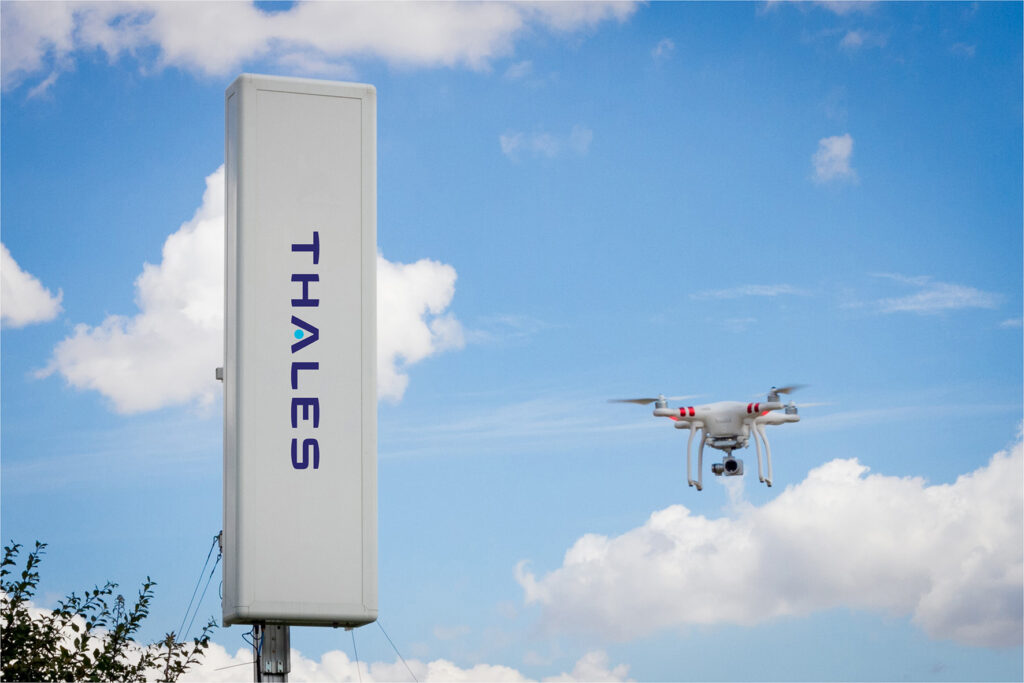
To address this fast-emerging drone threat we have developed the EagleShield – CUAS for Airports - (Counter - Unmanned Aerial System). A multi-sensor solution featuring its core the Gamekeeper holographic radar, enabling, long-range detection, identification and tracking of both collaborative and non-collaborative drones, protecting airport glidepaths for safer take-offs and landings.
EagleShield -CUAS for Airports- is a multi-layered and scalable solution comprising: a Gamekeeper holographic radar, long-range electro-optic (EO) sensors, Radio Frequency Direction Finders (RF) and remote ID sensors. The Gamekeeper radar features a 7.5km detection range and a 90° horizontal coverage, and the long-range EO sensors are crucial to detect non-collaborative drones - that is, drones flying without transmitting any information allowing their identification.
There are two key advantages to having a multi-layered drone detection system: The fusion of multiple sensors increases detection while also reducing false alarms, making sure that flight operations stay on time and are not interrupted by false alarms. In addition as a system of system solution, EagleShield -CUAS for Airports- is sensor- agnostic. The Gamekeeper radar and network infrastructure provided by Thales can integrate a large range of EO sensors, RF and/or remote ID sensor solutions according to airport operational needs. This offers a high level of flexibility to airports large or small around the world and ensures flight operations stay on time and remain secure.
EagleShield -CUAS for Airports- provides a holistic, long-range protection of the glidepaths and airport vicinity against non-collaborative and collaborative UAS. With 3 demonstration centers in the world, discover the demo for yourself.
GoDrone 2.0 – Drone Flight Planning App gets a new look!
Netherlands favourite flight planning app to relaunch with enhanced user experience and industry-ready flight planning tool set
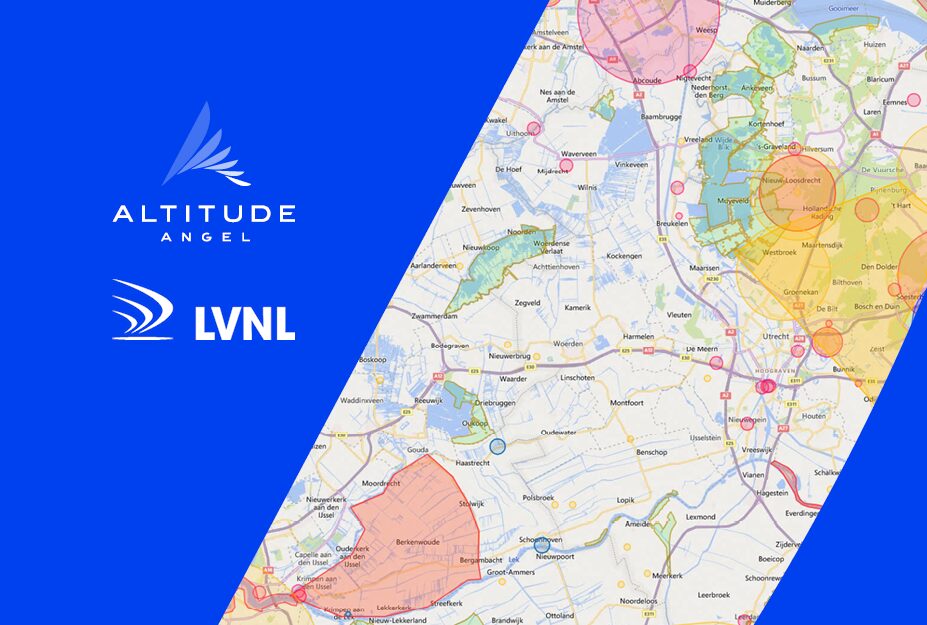
Netherlands ANSP LVNL and Altitude Angel, the world’s most trusted UTM (Unified Traffic Management) technology provider, have chosen the second day of Airspace World to announce the release of a new and improved version of the popular flight planning tool, GoDrone, bringing a host of new features which will give users an even greater understanding of the country’s airspace and access to it.
Designed and powered by Altitude Angel, GoDrone has established itself as the flight planning app for professional and recreational drone pilots across the Netherlands since its launch in April 2020.
“Planning is central to all commercial drone operations within a civil CTR, and any operator should start their flight plan with GoDrone, which is why we’re continuing to invest in the app,” said Wouter Pekela, Program Manager Unmanned Aviation, LVNL.
The new version of GoDrone, which begins rolling out in Q2 for both iOS and Android, is the most extensive update since the app was first launched and includes several enhancements and exciting new features.
The suite of updated features includes enhanced integrated flight planning, advanced flight plan drawing tools, and approval services – the ability to request access to fly digitally in airspace such as an airport CTR– through the app.
These updates make the app more user-friendly and intuitive for novice pilots, whilst providing several business-critical services for more experienced and professional operators.
In addition to enhanced integrated flight planning & drawing tools, GoDrone also includes new ‘pilot profiles’ and aircraft management, which provides users with the ability to log drone operator profiles, hours flown, and airframe hours used. These features are particularly useful for professional drone operators who may be required to manage or evidence their operational experience and help in managing airframe service intervals and the like.
Other upgrades and new features also include:
New UXUI -Completely rebuilt modern user interface.
New Accepted and Approved statuses, allowing GoDrone users to be able to receive more digital updates and information on their mission requests.
New Map Types including Satellite Maps to help you plan your drone flights safely and efficiently.
Advanced filter setup allows you to fully customise your airspace to suit your preferences, including political border and NOTAM’s.
Airframe Hanger – Ability to now input and save all of drones directly in the GoDrone APP.
GoDrone Operator Portal Integration – Information, edits and missions are natively linked between the GoDrone APP and Operator Portal.
Ground Hazards – Understand ground hazards in greater details, The Godrone now displays a list of ground hazards in the pre-flight report, each is clickable, providing users with more detailed information.
New Area reports feature which gives you a simple-to-understand view of where you can fly safely, where you need to exercise caution or areas that are prohibited.
Enhanced Security (Biometrics) Utilise the latest security features on your phone or tablet, including eye and fingerprint access.
New flight plan tools- Maximise your flight planning by using advanced drawing tools, or upload files directly from your device.
SeRo Systems awarded EUROCONTROL contract for1030/1090 MHz data collection service
Follow-on to original contract awarded in 2020.
EMIT platform provides comprehensive monitoring and analysis services
SeRo Systems, a leader in air traffic surveillance security and monitoring solutions, announced today that it has been awarded a 5-year follow-on contract for spectrum monitoring services from EUROCONTROL, the civil-military organization dedicated to supporting European aviation.
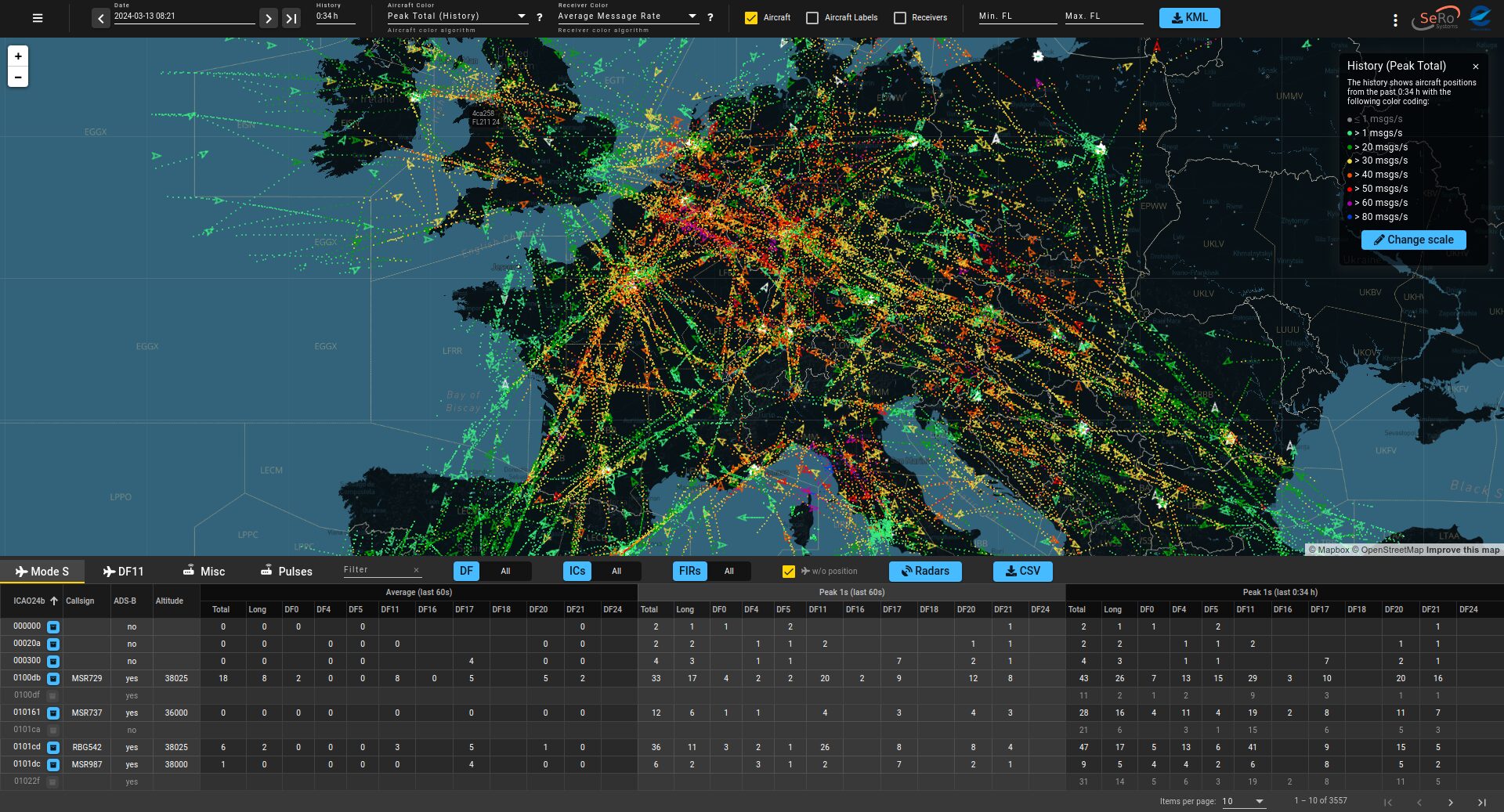
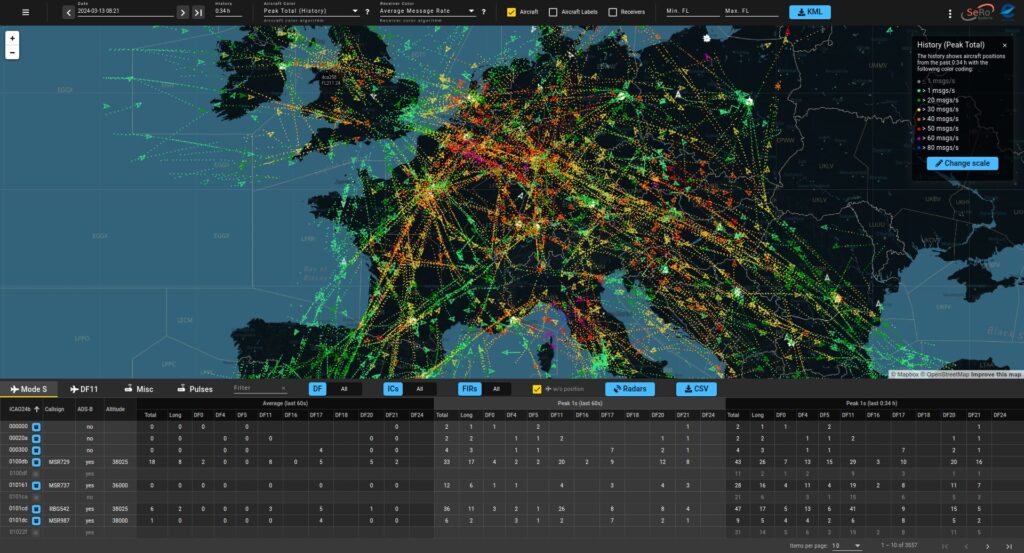
Under this contract, SeRo will continue to provide real-time datacollection and processing services, including host/data collection, preprocessing and a user interface, for the European Monitoring of Interrogators and Transponders (EMIT) platform. Developed bySeRo in 2020, EMIT provides comprehensive monitoring services, collects and manages the vast amount of data from the Europe-wide ground network of 1030/1090 MHz receivers, and combines the data feeds into a single feed. The system also processes the data, enabling automated detection and analysis of surveillance anomalies.
“We are honored to extend our partnership with EUROCONTROL to continue delivering critical spectrum monitoring services that enhance airspace safety and efficiency,” said Dr. Matthias Schäfer, managing director of SeRo Systems. “This contract leverages SeRo’s decade of experience in Big Data, high TRL surveillance data collection, and processing architecture, to help detect and analyze threats, including spectrum congestion or equipment malfunction. SeRo is committed to developing solutions that make air surveillance more secure and robust for stakeholders in Europe and around the world.”
“This system and SeRo have been an important part of our efforts to uphold the integrity of the CNS infrastructure and reduce spectrum congestion in our airspace,” added Petr Jonáš, EUROCONTROL ATM/CNS Expert. "Since 2020, EMIT has helped the European air traffic surveillance community not only monitor and manage frequency congestion but also detect and investigate incidents as well as avionics, transponder, and ground radar issues.”
Since its launch, EMIT has collected an impressive 3.15 trillion signals and boasts a growth rate of nearly 5 billion signals per day. Its capabilities include processing 90,000 signals per second during peak traffic hours, ensuring comprehensive monitoring and automated detection of anomalies within the European surveillance infrastructure. SeRo's proprietary deduplication algorithm ensures precise data analysis, while features such as online analysis, data archiving, and sensor operations monitoring enhance the system's effectiveness and usability.
Faster drone flight approvals with FREQUENTIS automated risk assessment tool in Lithuania
Frequentis digital application to cut the Specific Operations Risk Assessment (SORA) process time by up to 75 per cent
Automated risk assessment will enable scalable beyond visual line of sight operations
World’s first automated and digital risk analysis service as value add to an UTM system
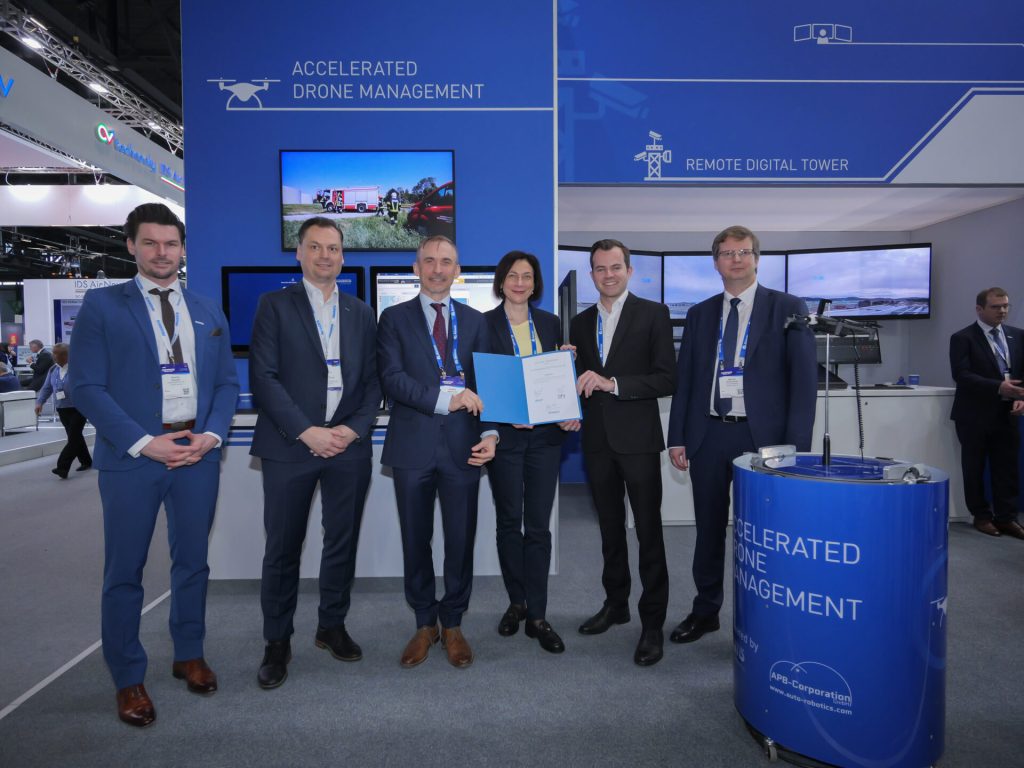
Oro Navigacija, the air navigation service provider (ANSP) of Lithuania, is extending its Frequentis uncrewed traffic management (UTM) solution with a digital, automated, risk assessment tool to speed up the classification of the risk posed by a drone flight in the specific category of operations and for the identification of mitigations and of the safety objectives.
The digital application from skyzr, a member of the Frequentis Group, is the world’s first for automated risk analysis supporting drone operators with creating SORA according to the guidelines defined by the Joint Authorities for Rulemaking of Unmanned Systems and European Union Aviation Safety Agency (EASA), cutting operator process time by up to 75 per cent.
The service, called wingman, will be provided as a web and mobile friendly application to be integrated into the future Lithuania UTM system, once deployed and operational. It follows the strategy to create a complete drone environment as a one stop shop for value added drone related services.
“In Lithuania, as with the rest of the world, the commercial need for scalable drone operations is increasing. Therefore, we are pleased to be able to support our Lithuanian drone industry by providing “wingman” as first additional value-add service to create digital risk assessments for faster flight permissions,” said Saulius Batavičius, CEO Oro Navigacija. “We are pleased to continue working with Frequentis by extending our current UTM service portfolio, harnessing their experience from other drone integration projects, while incorporating the specific needs of our airspace.”
In June 2023, Oro Navigacija selected Frequentis to provide its proven UTM solution for safe, efficient, and conformant introduction of drones into Lithuanian airspace as drone use cases grow.
“Automated and efficient risk assessments for drone operations will add value and safety to the ecosystem and, in particular, for emergency services. skyzr is pleased to be providing this additional digital service for the first ANSP in Europe to facilitate commercially valuable and lifesaving drone use cases. The extension of the wingman application, alongside the Frequentis UTM system, will further enhance safety and conformance and the ability for drones to scale with the perceived demand,” says Markus Bardach, Managing Director skyzr.
Frequentis is a global supplier of communication and information systems for control centres with safety-critical tasks. The listed family company develops and markets its “control centre solutions” in the Air Traffic Management segment (civil and military air traffic control, air defence) and the Public Safety & Transport segment (police, fire brigades, emergency rescue services, railways, coastguards, port authorities). With a market share of 30%, Frequentis is the world market leader in voice communication systems for air traffic control. Frequentis is also the global leader in aeronautical information management and aeronautical message handling systems.
As a global player with around 2,200 employees (full-time equivalents/FTE), Frequentis has a global network of companies and representatives in more than 50 countries. Its head office is in Vienna, Austria. Frequentis’ products, services, and solutions are used at more than 45,000 operator working positions in around 150 countries. Shares in Frequentis are traded on the Vienna and Frankfurt stock exchanges; ISIN: ATFREQUENT09, WKN: A2PHG5. In 2022, revenues were EUR 386.0 million and EBIT was EUR 25.0 million.
Wherever Frequentis’ systems are used, safety-critical operators bear responsibility for the safety of other people and goods. The company also works towards a more sustainable future through its air traffic optimisation solutions.
NATS crowned a winner at the prestigious Air Traffic Management Awards
The awards were held at CANSO Airspace World in recognition of the significant achievements by leaders, initiatives, and organisations in the air traffic management industry.
NATS was a winner in the Reimagining ATM Operations category which sought to recognised new approaches to airspace design, route optimisation, airspace classification and dynamic airspace management.
The West Airspace Deployment was one of the largest and most technically complex airspace changes NATS has ever delivered. A project that was the culmination of more than five years of development, it was successfully implemented on 23 March 2023.
Spanning 54,000nm2, the airspace structure above 7,000ft over southwest England and Wales was transformed to support the future of air travel and enable simpler, safer and more efficient flying. This once in a generation airspace upgrade forms an important part of the aviation industry’s roadmap to deliver a more sustainable future for air travel and supports the UK government’s Airspace Modernisation Strategy.
In a first for the UK, two separate airspace change proposals to introduce Systemisation and Free Route Airspace (FRA) operations were deployed simultaneously in a section of airspace that hosts some of the busiest routes for international flights to and from major UK airports.
The Digital Transformation in ATM category looks to recognise those working to revolutionising ATM for increased efficiency, safety, and capacity. NATS, LVNL, Leidos UK and Think Research were runners up for the deployment of Intelligent Approach, which went live at Amsterdam Airport Schiphol on 26 January 2023 following three years of close collaboration.
Intelligent Approach is an aircraft spacing tool developed by NATS and Leidos UK that allows air traffic controllers to improve the consistency of spacing between arriving aircraft. That helps maximise runway capacity, reducing delays and emissions and – importantly for LVNL – the noise impact on local residents.
Upon going live, Intelligent Approach immediately delivered up to six additional movements for each of Schiphol’s runways, not only delivering much needed tactical capacity but also allowing reduced usage of the airport’s most noise sensitive runways.
NATS was also shortlisted in the Integration of Drones and Advanced Air Mobilitycategory, recognised for its work in Project AMEC - Air Mobility Ecosystem Consortium.
Last year, NATS conducted the UK’s first major air traffic management simulations for Advanced Air Mobility (AAM), demonstrating how eVTOLs could one day be safely integrated with conventional air traffic.
The simulations were the culmination of three years of work creating the required infrastructure and processes for eVTOLs to safely operate in a complex airspace environment. The work has brought new airspace users a step closer to safely integrating with existing air traffic in the UK.
Project AMEC aims to demonstrate the commercial and end to end operational viability of Advanced Air Mobility in the UK. It is jointly funded by UKRI (UK Research and Innovation) Future Flight Challenge and is made up of NATS, Vertical Aerospace, Virgin Atlantic, AtkinsRéalis, Skyports, Connected Places Catapult, Cranfield University and WMG - University of Warwick, Bristol Airport, London City Airport and Heathrow Airport.
DFS Aviation Services and SITA revolutionize Air Traffic Management with new AMAN/DMAN solution
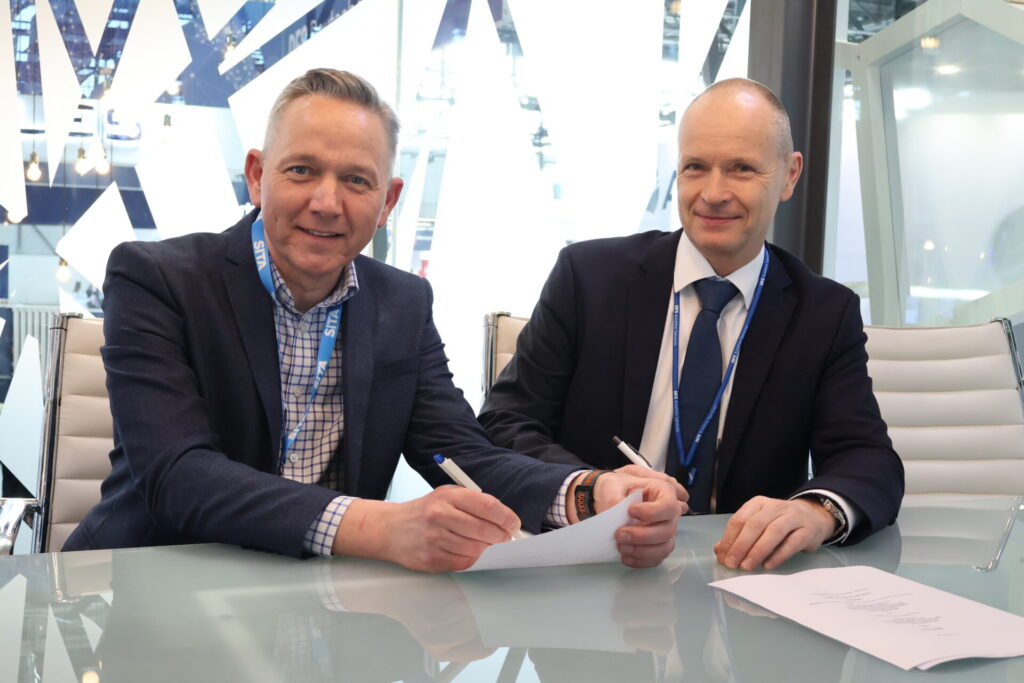
DFS Aviation Services (DAS) and SITA have announced a collaboration to develop a coupled Arrival Manager (AMAN) and Departure Manager (DMAN) solution. This strategic partnership, aligned with the Memorandum of Cooperation (MoC) between the two entities, aims to revolutionize air traffic management and enhance operational efficiency at airports worldwide.
The primary goal of this collaboration is to optimize outbound and inbound traffic, maximizing runway throughput and utilization, particularly at airports with mixed mode operations. By integrating DAS's ATC procedure expertise with SITA's ground movement knowledge and A- CDM capability, the coupled AMAN/DMAN solution promises to streamline flight operations and improve coordination among approach, tower controllers, and apron management staff. This collaborative initiative ensures that the coupled AMAN/DMAN solution meets the diverse needs of both airspace and ground operations.
“With our combined strengths, we are ready to deliver an innovative solution,” said Andreas Pötzsch, Managing Director from DAS. "Our goal is to achieve ICAO ASBU compliancy and set new standards for flight efficiency and coordination."
"The development of this solution is a testament to our commitment to innovation and collaboration," stated Peter Drummond, Vice President Airports, from SITA. "By working closely with experts and users from both systems, we are developing a product that improves airport operations and enhances the overall airport experience."
Faster drone flight approvals with FREQUENTIS automated risk assessment tool in Lithuania
Frequentis digital application to cut the Specific Operations Risk Assessment (SORA) process time by up to 75 per cent
Automated risk assessment will enable scalable beyond visual line of sight operations
World’s first automated and digital risk analysis service as value add to an UTM system
Oro Navigacija, the air navigation service provider (ANSP) of Lithuania, is extending its Frequentis uncrewed traffic management (UTM) solution with a digital, automated, risk assessment tool to speed up the classification of the risk posed by a drone flight in the specific category of operations and for the identification of mitigations and of the safety objectives.
The digital application from skyzr, a member of the Frequentis Group, is the world’s first for automated risk analysis supporting drone operators with creating SORA according to the guidelines defined by the Joint Authorities for Rulemaking of Unmanned Systems and European Union Aviation Safety Agency (EASA), cutting operator process time by up to 75 per cent.
The service, called wingman, will be provided as a web and mobile friendly application to be integrated into the future Lithuania UTM system, once deployed and operational. It follows the strategy to create a complete drone environment as a one stop shop for value added drone related services.
“In Lithuania, as with the rest of the world, the commercial need for scalable drone operations is increasing. Therefore, we are pleased to be able to support our Lithuanian drone industry by providing “wingman” as first additional value-add service to create digital risk assessments for faster flight permissions,” said Saulius Batavičius, CEO Oro Navigacija. “We are pleased to continue working with Frequentis by extending our current UTM service portfolio, harnessing their experience from other drone integration projects, while incorporating the specific needs of our airspace.”
In June 2023, Oro Navigacija selected Frequentis to provide its proven UTM solution for safe, efficient, and conformant introduction of drones into Lithuanian airspace as drone use cases grow.
“Automated and efficient risk assessments for drone operations will add value and safety to the ecosystem and, in particular, for emergency services. skyzr is pleased to be providing this additional digital service for the first ANSP in Europe to facilitate commercially valuable and lifesaving drone use cases. The extension of the wingman application, alongside the Frequentis UTM system, will further enhance safety and conformance and the ability for drones to scale with the perceived demand,” says Markus Bardach, Managing Director skyzr.
Spanish ENAIRE extends FREQUENTIS contingency communication and maintenance project for up to 12 years
Contract for expansion and maintenance of the voice communication backup systems for all major Spanish air traffic control (ATC) centres
Benefits to include increased capacity of air traffic controller radio and telephone resources improving the quality of contingency communications and resilience
Full integration into ENAIRE’S digital communication network
Extensive software maintenance element will prolong the system’s life span
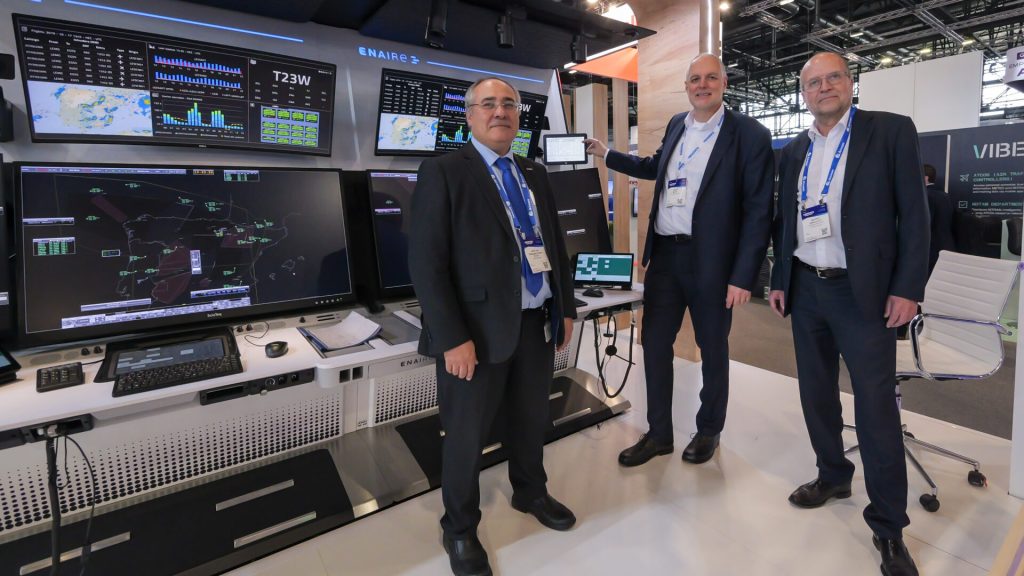
Spanish air navigation service provider (ANSP) ENAIRE has selected Frequentis to complete an expansion of its contingency communication systems upgrade, known as Last Resort Voice.
Frequentis has been successfully collaborating with ENAIRE since 2020 to implement its IP-based voice communication solution across Spain, bringing on average one centre live per year. The latest contract expansion will include operational maintenance to extend the lifecycle of its systems. The systems are being provided to all major ATC centres as a backup system in the event of unavailability of the main voice communications.
“Frequentis has been providing ENAIRE with its VCS3020X IP-based voice communication system as a contingency system across nine locations in Spain since 2020,” says Hannu Juurakko, Frequentis Executive Vice President ATM Civil and Chairman of the ATM Executive Team. “Providing comprehensive maintenance services for those systems to keep them up to date and to protect ENAIRE’s investment is the next step in this process to maximise the life cycle of the system.”
The project period is six years, with two potential three-year extensions, guaranteeing provision and coverage of operational needs for the next decade. Full integration into ENAIRE’s internet protocol (IP) communication network will facilitate the migration to voice over IP (VoIP), replacing older analogue features.
"We are facing an ambitious project that will allow us to have a contingency voice communication system for our control centres, with all the capabilities for oral communications between controllers and with pilots. This will allow us to ensure the provision of air traffic control service in a more efficient way and with the use of cutting-edge digital technology," says Enrique Maurer, CEO ENAIRE.
Adacel awarded new FAA contract for TSS System Software and Support
Adacel Technologies Limited, an industry leader in advanced Air Traffic Management (ATM) and Air Traffic Control (ATC) simulation and training solutions, announces a new contract award from the Federal Aviation Administration (FAA). The contract, a Firm Fixed Price (FFP) Indefinite Delivery Indefinite Quantity (IDIQ) contract, includes a one-year Base Period and four, one-year Option Periods. Under this contract, Adacel will provide ATC Tower Simulation System (TSS) Software and Support Services for technical and operational training of Air Traffic Controllers at selected FAA Air Traffic Control Towers (ATCTs). Adacel estimates the total value of the contract over its five-year duration to be USD$6.7 million contingent on the optional years exercised.
Speaking about the award, Daniel Verret, Adacel’s CEO states, “As the FAA TSS software Original Equipment Manufacturer (OEM), we are thrilled with the confidence the Federal Aviation Administration continues to place in our team, products, and services. Adacel consistently improves the performance of its ATC simulation software, while maintaining the highest levels of availability and reliability. We look forward to successfully supporting the FAA TSS software and deploying our latest ATC training software solutions to the FAA.”
The comprehensive scope of the awarded contract includes TSS software support andmaintenance plus options to update the TSS simulation engine, speech recognition software and migrate the FAA’s current Image Generator to AeroScene, Adacel’s latest and state-of-theart image generator solution.
“We are fully committed in supporting the FAA to successfully recruit, train, and enhance the skills of Air Traffic Controllers at critical National Airspace System (NAS) terminal facilities and ensure each day is a training day with Adacel’s high-performing simulation and training solutions,” continues Mr. Verret.
This contract reaffirms Adacel’s industry leadership and ongoing collaboration with the FAA, spanning over two decades. By delivering industry-leading technology and solutions, Adacel remains committed to advancing air traffic control simulation and training systems for the benefit of the aviation industry.
This contract award has already been included in the Company’s forecasts. There are nomaterial conditions that need to be satisfied before the contract becomes legally binding.
People are our strength
Katrina Hall, Deputy Chief Operating Officer NAS Programs and Support, FAA ATO, is a key panellist at our Inclusive Skies: Strategies for Diversity in Aviation session in the Boeing Theatre on Wednesday 20 March, at 15:30. Here she talks about the importance of diversity and inclusion in the ATM industry.
Is aviation an attractive industry to Gen Z?
Aviation is undergoing momentous change. Drones and commercial space vehicles are revolutionizing the industry, we’re introducing digital technologies and looking at how artificial intelligence (AI) can be used to increase safety. There are future technologies that I can only dream about and have yet to be invented. We need to recruit a passionate and curious workforce as we integrate all these new technologies into the system.
I think aviation, with its strong history of innovation and focus on connecting people, is attractive to Gen Z. Our challenge is ensuring that through outreach, we meet them on their terms, in their spaces. For example, we have a strong digital footprint on social media and collaborate with influencers from our target audiences to engage with and provide information to Gen Zers on aviation opportunities.
What more can we do to close the gender gap?
Women play critical roles throughout the Federal Aviation Administration (FAA). Organizations like Professional Women Controllers, Inc., Technical Women’s Organization and the Federal Women’s Program are breaking down barriers to the hiring and advancement of women as well as enhancing employment opportunities for women in every area of federal service.
We know we have more work to do, and through our diversity, equity, inclusion and accessibility (DEIA) and science, technology, engineering and math (STEM) outreach programs continue to engage with women and female students to show them the career opportunities that exist in aviation.
How important are role models?
I believe that role models are hugely important. It’s so much easier to see yourself in a career if you have a person who can support or inspire you on your journey.
We know that there are many talented people who would excel in aviation, however if you are in a community where no one talks about aviation it’s hard to imagine oneself making it a career. That’s why I am so passionate about mentorship – I’m able to provide information and see opportunities that the person may never have considered.
In addition to our established recruitment efforts, those of us who work in aviation are the best advocates for our industry. I believe we should all aspire to be the role model that we wanted/needed when we started our professional journeys.
What constitutes success in diversity?
At the FAA people are our strength. We are stronger, more innovative, and more successful when diverse talents and experiences are present at the table. The mission of the FAA is to ensure the safety of a diverse nation. It only makes sense that the workforce responsible for that mission reflects the nation that it serves.
For the FAA, diversity is a wide range of life experiences and backgrounds. We believe diversity is needed to ensure multiple perspectives are at the table, guarantee safety as a priority, and promote a healthy work environment. We believe that when we work together, we will advance our objectives more efficiently and effectively than if we do not.
Hear from Katrina at the Inclusive Skies: Strategies for Diversity in Aviation session, Wednesday 20 March, 15:30, Boeing Theatre
Reflections on a super Tuesday
Tuesday saw the opening day of Airspace World 2024, with thousands of attendees from over 130 countries coming to be part of the largest ATM gathering. You can see all of yesterday's pictures here.
Don’t waste a Wednesday at Airspace World
Airspace World is in full swing, and all our speakers and exhibitors are stepping up to the challenge of keeping our attendees engaged and informed. As ever, there is a full programme of sessions at the five theatres. Here are just a few highlights:
10:00-10:25am Wing Theatre
Electronic Conspicuity, the Roadblock to AAM
A complete picture of airspace is necessary for the safety of all users. The concept of sharing position data is called Electronic Conspicuity. Traditionally, this is done with ADS-B systems but not all aircraft can or choose to use ADS-B. This session will look at UTM, designed to be a comprehensive EC system capable of supporting various types of flight plans and flight tracking systems.
10:30-11:20am Boeing Theatre
Solving a Decades-Old Problem: Dynamic Civil-Military Airspace Sharing
A US company is looking to facilitate civil-military cooperation. Its solution – called Dynamic Airspace Sharing – provides tools to military range commanders, air traffic controllers and flights dispatchers. The aim is to achieve notable reductions in flight times, operating expenses and CO2 emissions.
Increasing digitalisation means an increasing cybersecurity challenge. Participants in this panel will explore the latest emerging technologies relevant to aviation, and discuss the measures, strategies, and collaborative efforts required to fortify the integrity of our airspace systems.
2:30-2:55pm Future Skies Theatre
Enabling Reasonable Autonomy for Emphatic AI Agents in ATM through Large Language Models
Large Language Models (LLMs) have the potential to shape aviation’s future. LLMs can function as reasoning engines, self-deciding agents and human-machine interfaces on a variety of fields, such as ATCO workflows, airline operations and U-space services. Learn how these models ingest relevant data and output informed answers.
4:00-4:25pm Frequentis Theatre
The Power of Sharing: Operational Benefits of Convergence
Find out how advanced digital technology is driving a convergence between airport and tower operations. This promises several advantages, including enhanced situational awareness, an increased time horizon for decision-making and optimisation of airport capacity.
Igniting a passion for aviation article
Lorem ipsum dolor sit amet, consectetur adipiscing elit. Vestibulum quis varius lorem. Morbi velit lacus, porta vel aliquam at, cursus non elit. Etiam mauris mi, congue in auctor dapibus, lobortis vitae magna. Proin quis sapien velit. Aenean ac ante sit amet mauris mattis sagittis. Morbi vel rutrum ipsum. Nulla metus nibh, laoreet non turpis sed, molestie consectetur est. Integer quis malesuada eros, vel suscipit dolor. Vestibulum facilisis purus est, sit amet cursus justo mollis consectetur. Aliquam erat volutpat. Nulla facilisi.
Aenean sodales laoreet metus, et ullamcorper dui feugiat ac. Pellentesque faucibus facilisis euismod. Duis risus dolor, tincidunt et sagittis a, tempor at ex. Aenean vitae tincidunt nibh. Sed quam metus, facilisis vitae tortor eget, aliquam facilisis nunc. Interdum et malesuada fames ac ante ipsum primis in faucibus. Proin consequat scelerisque elit. Vivamus non massa rutrum, varius lorem a, posuere magna. In elementum lorem vitae lectus vehicula iaculis vitae id diam. In quis nibh tempor, hendrerit velit non, tincidunt ipsum. Aliquam varius suscipit odio, non ornare purus porttitor et. Vivamus pretium turpis cursus iaculis volutpat.
Etiam et venenatis magna, quis euismod leo. Mauris venenatis velit in sem faucibus, sit amet vehicula sapien aliquam. Vestibulum aliquam dui ac libero elementum, at congue tellus interdum. Nullam id finibus sapien. Fusce porta enim ut finibus consequat. Fusce est ante, aliquam eu mattis id, rhoncus at tellus. Proin sed dapibus augue. Aliquam faucibus convallis arcu vel consequat. Mauris pulvinar sem nec neque sodales, non porta dolor ultrices. Curabitur et pulvinar mi. Sed non interdum nisl. Phasellus cursus vehicula nisi nec ornare. Class aptent taciti sociosqu ad litora torquent per conubia nostra, per inceptos himenaeos. Sed et tempus metus, sed fermentum nisl. Maecenas mattis, urna non maximus maximus, lorem tellus porta magna, eu fringilla tellus enim ac ipsum. Praesent sem nisl, fermentum eget enim quis, imperdiet gravida lacus.
Nunc massa elit, laoreet ut vehicula eu, euismod a turpis. Quisque sit amet sapien pulvinar, ullamcorper ante ac, volutpat tortor. Nam at purus vehicula, accumsan ligula non, venenatis odio. Duis scelerisque placerat sem sed tincidunt. Phasellus fermentum fermentum mauris eget posuere. Praesent sed lectus placerat, fermentum justo at, lacinia risus. Proin nec bibendum justo. Ut dictum massa tellus, rhoncus auctor lorem elementum quis.
Aliquam erat volutpat. Nunc commodo leo ipsum, nec condimentum nisi aliquam ac. Sed consectetur, sem sit amet eleifend sodales, urna ante finibus odio, quis vestibulum elit orci non elit. Maecenas sem ante, vulputate sit amet mollis eu, vulputate vel nunc. Aenean urna tellus, aliquam eget efficitur id, suscipit in arcu. Nam quis neque at felis luctus tincidunt. Integer hendrerit, nulla quis tristique faucibus, massa libero rutrum velit, quis feugiat tortor arcu molestie dui. Donec varius nibh metus, ac malesuada dolor ultricies ac. Suspendisse nec posuere sapien, at pellentesque sem. Etiam tempor ornare elit. Quisque diam ligula, rutrum id maximus ut, pulvinar a odio. Ut viverra erat at diam ornare aliquam.
Advertisement
Lorem ipsum dolor sit amet, consectetur adipiscing elit. Vestibulum quis varius lorem. Morbi velit lacus, porta vel aliquam at, cursus non elit. Etiam mauris mi, congue in auctor dapibus, lobortis vitae magna. Proin quis sapien velit. Aenean ac ante sit amet mauris mattis sagittis. Morbi vel rutrum ipsum. Nulla metus nibh, laoreet non turpis sed, molestie consectetur est. Integer quis malesuada eros, vel suscipit dolor. Vestibulum facilisis purus est, sit amet cursus justo mollis consectetur. Aliquam erat volutpat. Nulla facilisi.
Aenean sodales laoreet metus, et ullamcorper dui feugiat ac. Pellentesque faucibus facilisis euismod. Duis risus dolor, tincidunt et sagittis a, tempor at ex. Aenean vitae tincidunt nibh. Sed quam metus, facilisis vitae tortor eget, aliquam facilisis nunc. Interdum et malesuada fames ac ante ipsum primis in faucibus. Proin consequat scelerisque elit. Vivamus non massa rutrum, varius lorem a, posuere magna. In elementum lorem vitae lectus vehicula iaculis vitae id diam. In quis nibh tempor, hendrerit velit non, tincidunt ipsum. Aliquam varius suscipit odio, non ornare purus porttitor et. Vivamus pretium turpis cursus iaculis volutpat.
Etiam et venenatis magna, quis euismod leo. Mauris venenatis velit in sem faucibus, sit amet vehicula sapien aliquam. Vestibulum aliquam dui ac libero elementum, at congue tellus interdum. Nullam id finibus sapien. Fusce porta enim ut finibus consequat. Fusce est ante, aliquam eu mattis id, rhoncus at tellus. Proin sed dapibus augue. Aliquam faucibus convallis arcu vel consequat. Mauris pulvinar sem nec neque sodales, non porta dolor ultrices. Curabitur et pulvinar mi. Sed non interdum nisl. Phasellus cursus vehicula nisi nec ornare. Class aptent taciti sociosqu ad litora torquent per conubia nostra, per inceptos himenaeos. Sed et tempus metus, sed fermentum nisl. Maecenas mattis, urna non maximus maximus, lorem tellus porta magna, eu fringilla tellus enim ac ipsum. Praesent sem nisl, fermentum eget enim quis, imperdiet gravida lacus.
Nunc massa elit, laoreet ut vehicula eu, euismod a turpis. Quisque sit amet sapien pulvinar, ullamcorper ante ac, volutpat tortor. Nam at purus vehicula, accumsan ligula non, venenatis odio. Duis scelerisque placerat sem sed tincidunt. Phasellus fermentum fermentum mauris eget posuere. Praesent sed lectus placerat, fermentum justo at, lacinia risus. Proin nec bibendum justo. Ut dictum massa tellus, rhoncus auctor lorem elementum quis.
Aliquam erat volutpat. Nunc commodo leo ipsum, nec condimentum nisi aliquam ac. Sed consectetur, sem sit amet eleifend sodales, urna ante finibus odio, quis vestibulum elit orci non elit. Maecenas sem ante, vulputate sit amet mollis eu, vulputate vel nunc. Aenean urna tellus, aliquam eget efficitur id, suscipit in arcu. Nam quis neque at felis luctus tincidunt. Integer hendrerit, nulla quis tristique faucibus, massa libero rutrum velit, quis feugiat tortor arcu molestie dui. Donec varius nibh metus, ac malesuada dolor ultricies ac. Suspendisse nec posuere sapien, at pellentesque sem. Etiam tempor ornare elit. Quisque diam ligula, rutrum id maximus ut, pulvinar a odio. Ut viverra erat at diam ornare aliquam.
Advertorial
Lorem ipsum dolor sit amet, consectetur adipiscing elit. Vestibulum quis varius lorem. Morbi velit lacus, porta vel aliquam at, cursus non elit. Etiam mauris mi, congue in auctor dapibus, lobortis vitae magna. Proin quis sapien velit. Aenean ac ante sit amet mauris mattis sagittis. Morbi vel rutrum ipsum. Nulla metus nibh, laoreet non turpis sed, molestie consectetur est. Integer quis malesuada eros, vel suscipit dolor. Vestibulum facilisis purus est, sit amet cursus justo mollis consectetur. Aliquam erat volutpat. Nulla facilisi.
Aenean sodales laoreet metus, et ullamcorper dui feugiat ac. Pellentesque faucibus facilisis euismod. Duis risus dolor, tincidunt et sagittis a, tempor at ex. Aenean vitae tincidunt nibh. Sed quam metus, facilisis vitae tortor eget, aliquam facilisis nunc. Interdum et malesuada fames ac ante ipsum primis in faucibus. Proin consequat scelerisque elit. Vivamus non massa rutrum, varius lorem a, posuere magna. In elementum lorem vitae lectus vehicula iaculis vitae id diam. In quis nibh tempor, hendrerit velit non, tincidunt ipsum. Aliquam varius suscipit odio, non ornare purus porttitor et. Vivamus pretium turpis cursus iaculis volutpat.
Etiam et venenatis magna, quis euismod leo. Mauris venenatis velit in sem faucibus, sit amet vehicula sapien aliquam. Vestibulum aliquam dui ac libero elementum, at congue tellus interdum. Nullam id finibus sapien. Fusce porta enim ut finibus consequat. Fusce est ante, aliquam eu mattis id, rhoncus at tellus. Proin sed dapibus augue. Aliquam faucibus convallis arcu vel consequat. Mauris pulvinar sem nec neque sodales, non porta dolor ultrices. Curabitur et pulvinar mi. Sed non interdum nisl. Phasellus cursus vehicula nisi nec ornare. Class aptent taciti sociosqu ad litora torquent per conubia nostra, per inceptos himenaeos. Sed et tempus metus, sed fermentum nisl. Maecenas mattis, urna non maximus maximus, lorem tellus porta magna, eu fringilla tellus enim ac ipsum. Praesent sem nisl, fermentum eget enim quis, imperdiet gravida lacus.
Nunc massa elit, laoreet ut vehicula eu, euismod a turpis. Quisque sit amet sapien pulvinar, ullamcorper ante ac, volutpat tortor. Nam at purus vehicula, accumsan ligula non, venenatis odio. Duis scelerisque placerat sem sed tincidunt. Phasellus fermentum fermentum mauris eget posuere. Praesent sed lectus placerat, fermentum justo at, lacinia risus. Proin nec bibendum justo. Ut dictum massa tellus, rhoncus auctor lorem elementum quis.
Aliquam erat volutpat. Nunc commodo leo ipsum, nec condimentum nisi aliquam ac. Sed consectetur, sem sit amet eleifend sodales, urna ante finibus odio, quis vestibulum elit orci non elit. Maecenas sem ante, vulputate sit amet mollis eu, vulputate vel nunc. Aenean urna tellus, aliquam eget efficitur id, suscipit in arcu. Nam quis neque at felis luctus tincidunt. Integer hendrerit, nulla quis tristique faucibus, massa libero rutrum velit, quis feugiat tortor arcu molestie dui. Donec varius nibh metus, ac malesuada dolor ultricies ac. Suspendisse nec posuere sapien, at pellentesque sem. Etiam tempor ornare elit. Quisque diam ligula, rutrum id maximus ut, pulvinar a odio. Ut viverra erat at diam ornare aliquam.
Lorem ipsum dolor sit amet, consectetur adipiscing elit. Vestibulum quis varius lorem. Morbi velit lacus, porta vel aliquam at, cursus non elit. Etiam mauris mi, congue in auctor dapibus, lobortis vitae magna. Proin quis sapien velit. Aenean ac ante sit amet mauris mattis sagittis. Morbi vel rutrum ipsum. Nulla metus nibh, laoreet non turpis sed, molestie consectetur est. Integer quis malesuada eros, vel suscipit dolor. Vestibulum facilisis purus est, sit amet cursus justo mollis consectetur. Aliquam erat volutpat. Nulla facilisi.
Aenean sodales laoreet metus, et ullamcorper dui feugiat ac. Pellentesque faucibus facilisis euismod. Duis risus dolor, tincidunt et sagittis a, tempor at ex. Aenean vitae tincidunt nibh. Sed quam metus, facilisis vitae tortor eget, aliquam facilisis nunc. Interdum et malesuada fames ac ante ipsum primis in faucibus. Proin consequat scelerisque elit. Vivamus non massa rutrum, varius lorem a, posuere magna. In elementum lorem vitae lectus vehicula iaculis vitae id diam. In quis nibh tempor, hendrerit velit non, tincidunt ipsum. Aliquam varius suscipit odio, non ornare purus porttitor et. Vivamus pretium turpis cursus iaculis volutpat.
Etiam et venenatis magna, quis euismod leo. Mauris venenatis velit in sem faucibus, sit amet vehicula sapien aliquam. Vestibulum aliquam dui ac libero elementum, at congue tellus interdum. Nullam id finibus sapien. Fusce porta enim ut finibus consequat. Fusce est ante, aliquam eu mattis id, rhoncus at tellus. Proin sed dapibus augue. Aliquam faucibus convallis arcu vel consequat. Mauris pulvinar sem nec neque sodales, non porta dolor ultrices. Curabitur et pulvinar mi. Sed non interdum nisl. Phasellus cursus vehicula nisi nec ornare. Class aptent taciti sociosqu ad litora torquent per conubia nostra, per inceptos himenaeos. Sed et tempus metus, sed fermentum nisl. Maecenas mattis, urna non maximus maximus, lorem tellus porta magna, eu fringilla tellus enim ac ipsum. Praesent sem nisl, fermentum eget enim quis, imperdiet gravida lacus.
Nunc massa elit, laoreet ut vehicula eu, euismod a turpis. Quisque sit amet sapien pulvinar, ullamcorper ante ac, volutpat tortor. Nam at purus vehicula, accumsan ligula non, venenatis odio. Duis scelerisque placerat sem sed tincidunt. Phasellus fermentum fermentum mauris eget posuere. Praesent sed lectus placerat, fermentum justo at, lacinia risus. Proin nec bibendum justo. Ut dictum massa tellus, rhoncus auctor lorem elementum quis.
Aliquam erat volutpat. Nunc commodo leo ipsum, nec condimentum nisi aliquam ac. Sed consectetur, sem sit amet eleifend sodales, urna ante finibus odio, quis vestibulum elit orci non elit. Maecenas sem ante, vulputate sit amet mollis eu, vulputate vel nunc. Aenean urna tellus, aliquam eget efficitur id, suscipit in arcu. Nam quis neque at felis luctus tincidunt. Integer hendrerit, nulla quis tristique faucibus, massa libero rutrum velit, quis feugiat tortor arcu molestie dui. Donec varius nibh metus, ac malesuada dolor ultricies ac. Suspendisse nec posuere sapien, at pellentesque sem. Etiam tempor ornare elit. Quisque diam ligula, rutrum id maximus ut, pulvinar a odio. Ut viverra erat at diam ornare aliquam.
Advertisement
Gallery
Welcome intro lorem ipsum dolor sit amet, consec tetuer adipiscing elit, sed diam nonummy nibh euismod tincidunt ut laoreet dolore magna aliquam erat volutpat. Ut wisi enim ad minim veniam, quis nostrud exerci tation ullamcorper suscipit lobortis nisl ut aliquip.
Today at Airspace world
Welcome intro lorem ipsum dolor sit amet, consec tetuer adipiscing elit, sed diam nonummy nibh euismod tincidunt ut laoreet dolore magna aliquam erat volutpat. Ut wisi enim ad minim veniam, quis nostrud exerci tation ullamcorper suscipit lobortis nisl ut aliquip.
Highlighted speakers
Agenda
Thu 28 May
Event
Location
Speakers
10:00am
-
10:25am
Viasat Presentation
Viasat Theatre
Event info
Subject areas
10:00am
-
10:50am
New entrants
Boeing Theatre
Event info
The growth of drone operations is increasing pressure on Europe’s airspace and accelerating the need for scalable, harmonised integration solutions. U-space provides the EU framework and eco-system to enable safe and efficient drone operations alongside manned aviation, but its transition from regulation to operational deployment raises challenges related to interoperability, ATM integration, resilience and governance.
This panel will assess the state of U-space implementation across Europe and will discuss priorities for its evolution, including the need for research to support the industry, the role of GNSS-based services, certification and oversight, and cooperation between civil, governmental and public-interest users of the airspace.
Moderated jointly by EDA and EUSPA, with participation from European institutions including SJU, EASA and industry representatives.
Subject areas
10:00am
-
10:25am
Invisible Risk: Why Fatigue, Mental Health and Psychological Safety Are Aviation’s Next Safety Frontier
As aviation systems become more complex, the greatest emerging risks are no longer only technical, they are human. Fatigue, cognitive overload, mental health stigma, and fear of disclosure continue to undermine safety, decision-making, and workforce sustainability across aviation operations.
This session explores how safety-critical organisations can move beyond awareness campaigns and peer-support models toward structured, evidence-based systems that enable early detection, safe disclosure, and effective return-to-work pathways, without compromising operational integrity.
Drawing on global aviation case insights and operational risk data, the session will examine where current approaches fall short and what leading organisations are doing differently to embed psychological safety, fatigue risk management, and human sustainability into their safety frameworks.
Subject areas
Policy, Regulation & Governance
People, Skills & Next-Gen
Safety, Security & Resilience in ATM
10:00am
-
10:25am
Enabling Trajectory-Based Operations through OLDI Modernization over SWIM Yellow Profile
Collaborative Operations for Sustainable Skies, Innovation to Enable Future Skies, Seamless Skies for All
Innovation in Air Traffic Management is defined by how effectively we share information. This talk highlights LEONARDO’s recent milestone in validating OLDI modernization over SWIM Yellow Profile within the SESAR framework, in collaboration with EUROCONTROL, BULATSA and ROMATSA, with cross-border connectivity to Türkiye.
This solution provides a standardized, high-performance environment for real-time data exchange with sub-second data sharing across EUROCONTROL and three ANSPs. It demonstrates a practical first step toward Network TBO, supporting the SESAR Deployment Manager, EUROCONTROL’s Network Strategy, and 4D Trajectory vision, while paving the way for more advanced trajectory-driven operations in a digitalized European airspace.
Subject areas
Collaborative Operations for Sustainable Skies
Innovation to Enable Future Skies
Seamless Skies for All
10:00am
-
10:25am
Accelerating AAM Commercialisation – Aligning Operators, UTM Service Providers, and Vertiport Developers
As Europe moves from AAM trials to early commercial operations, success will depend on how well operators, UTM service providers and vertiport developers align around a shared operational and commercial model.
This panel brings together leaders from across the AAM ecosystem to examine what is needed to move beyond concept validation and enable scalable, viable services.
Panellists will explore the commercialisation of the digital and operational infrastructure required to support safe, automated and interoperable AAM operations – from dynamic airspace management and real-time deconfliction to performance monitoring at a network level to enable scale and volumes needed for ROI. Vertiport developers will share practical insights on urban integration, passenger experience, turnaround processes and the importance of harmonised interfaces with ATM and U-space services to also enable sustainable and scalable commercial operations
The session is a chance to learn how coordinated, cost-effective delivery across the ecosystem can accelerate AAM commercialisation and build confidence for investors, regulators and the travelling public.
Subject areas
Innovation to Enable Future Skies
10:30am
-
10:55am
Frequentis Presentation
Frequentis Theatre
Event info
Subject areas
10:30am
-
10:55am
Wing Session 5
Wing Theatre
Event info
Subject areas
10:30am
-
10:55am
Advanced Air Mobility High Resolution Weather Requirements
Advanced Air Mobility (AAM) encompasses a range of technological changes that are transforming aviation. The scale, range, and altitude of AAM operations imply that weather will play differently to its role in conventional aviation as there will be increased impacts from dynamic conditions in the planetary boundary layer. Therefore, there is the need for additional weather sensing and higher resolution weather models to be integrated with advanced decision support technologies. This joint presentation between MIT Lincoln Laboratory and SkyGrid will discuss how high resolution weather forecast (HRF) models can be used for AAM operation planning. Moreover, some progress towards identifying industry-specific weather requirements for AAM operations leveraging high-resolution models will be presented.
Subject areas
Innovation to Enable Future Skies
Drones & UTM
10:30am
-
10:55am
Implementing Model-Based Safety Analysis (MBSA) in Air Traffic Management (ATM) Safety Studies: A SimfiaNeo Demonstrator for Exhaustive and Automated Safety Analysis
This session will present a project focused on the implementation of the Model-Based Safety Analysis (MBSA) methodology for Air Traffic Management (ATM) safety studies, leveraging the SimfiaNeo tool. We will showcase a demonstrator model developed for an ATM system within the tool.
The core advantage of this approach lies in SimfiaNeo’s ability to perform an in-depth analysis of the system and the propagation of failures within it. The traditional methodology relies on fault trees, requiring the safety engineer to manually imagine all potential failure scenarios. This manual process is inherently time-consuming and error-prone. Conversely, SimfiaNeo exhaustively and automatically analyzes all failure propagation paths that can lead to a failure condition.
Furthermore, MBSA and SimfiaNeo provide benefits that extend beyond mere time and cost efficiency. By being integrated with the design, the safety model provides a more concrete approach than a classic fault tree. This proximity to the system design significantly facilitates exchanges with both design teams and operational personnel, which in turn accelerates system adoption and technical discussions. The model itself therefore becomes a powerful presentation and communication support tool.
The objective is to highlight and showcase the significant advantages of this approach and the specific gains offered by a dedicated tool like SimfiaNeo in ATM safety assessments, leading to improvements in both rigor and efficiency.
Subject areas
Safety, Security & Resilience in ATM
11:00am
-
11:25am
Boeing Presentation
Boeing Theatre
Event info
Subject areas
11:00am
-
11:50am
CANSO CEO Conversation: The Next Generation of ATM, Where Technology Meets Talent and Diversity
Viasat Theatre
Event info
Subject areas
11:00am
-
11:50am
The benefits of Common Project 1 deployment in Europe
Frequentis Theatre
Event info
Collaborative Operations for Sustainable Skies, Seamless Skies for All, Safety, Security & Resilience in ATM
As Europe accelerates its journey toward a smarter, more sustainable and more interoperable air traffic management system, the implementation of Common Project 1 (CP1) stands at a decisive moment.
In this session, the SESAR Deployment Manager will unpack how CP1 deployment is already shaping operational performance across the continent—enhancing predictability, supporting greener trajectories, and reinforcing network resilience—while offering a forward-looking view of what comes next.
This session will give ATM professionals a clear, compelling picture of the tangible value CP1 brings to European aviation. Attendees will gain insights into lessons learned, opportunities emerging from synchronised implementation, and the strategic role CP1 plays in Europe’s broader digitalisation and decarbonisation ambitions.
Designed to spark dialogue and prepare the ground for deeper exchanges throughout Airspace World 2026, this session provides an essential update for anyone involved in shaping the future of European ATM.
Subject areas
Collaborative Operations for Sustainable Skies
Seamless Skies for All
Safety, Security & Resilience in ATM
11:00am
-
11:50am
Where advanced engineering meets a human-centric vision for tomorrow’s services
People, Skills & Next-Gen, Innovation to Enable Future Skies
Technology is aggressively redefining the boundaries of what can be built and operated within Air Traffic Management (ATM) software and services. We are witnessing a fundamental paradigm shift: while humans have traditionally built and operated systems with machines serving as passive verifiers, a new era is emerging. In this model, Generative AI (GenAI) and automated systems take on the heavy lifting of production and operations, empowering human experts to ascend to a higher-level role: controlling and optimizing system-wide performance.
The core of this is simple yet transformative: The more machines operate, the more humans can elevate performance.
This shift raises critical questions for the industry:
Autonomous Production: Can GenAI autonomously translate complex requirements into natural language into prototypes, components, and ready-to-use ATC system code?
Certification & Standards: What new certification frameworks are required to validate AI-generated code in a safety-critical environment and to be securely deployed in cloud infrastructure?
Sovereignty: How can we leverage generic European technology, control depedencies and institutional guarantees to fulfill certification requirements at a lower cost and within a shorter timeframe?
This talk explores the value of “technology-driven crafting.” With Cloud, AI, and data architectures reaching maturity, the capability to accelerate ATM modernization through GenAI-produced code is no longer a theoretical exercise—it is a matter of adoption and integration at scale. We will discuss how moving toward open architectures and AI-driven code production creates a human-centric service orientation that is faster, more resilient, and ready for the next generation of airspace.
Subject areas
People, Skills & Next-Gen
Innovation to Enable Future Skies
11:00am
-
11:25am
Beyond Legacy and Lock-In: An ANSP’s Journey to an Open ATM Platform
For decades, critical airside and air traffic management operations have relied on legacy technologies that delivered reliability—but at a significant cost. Data became fragmented, interoperability was limited, and both airports and ANSPs grew increasingly dependent on a small number of vendors. As operational needs evolved, change was often slow, complex, and expensive—constrained more by architectural rigidity than by operational ambition.
Today, the industry is once again in a period of transformation. Digitalisation, automation, and data-driven operations are central to future performance. “Platforms” are widely promoted as the solution. Yet many proprietary platforms risk recreating the same structural limitations of the past, this time with modern interfaces and new terminology.
In this joint session, NATS and Searidge share how the UK’s ANSP has adopted an open, platform-based ATM architecture to break this cycle. The speakers will explain why legacy approaches are no longer sufficient, what is driving the move to an open platform model, and how this shift is enabling greater flexibility, resilience, and innovation.
Using real-world examples, the session will demonstrate how a shared digital foundation supports faster deployment, improved situational awareness, and new operational services.
Attendees will gain practical insight into what defines a strong ATM platform, why ANSPs should own their foundational architecture, and how this approach supports NATS’ long-term vision for future UK tower operations.
Subject areas
Innovation to Enable Future Skies
11:30am
-
11:55am
Digitalisation and the CNS Technical Workforce: Through-life Performance Management and Closing the Capability Gap in Radar Surveillance
Digitalisation promises measurable gains in safety, efficiency, and lifecycle traceability across Air Traffic Management (ATM), particularly in the Communication Navigation Surveillance (CNS) domain. Yet the transition from analogue to digital—preceded by decades of digitisation—has also introduced an unintentional capability gap in the CNS technical workforce.
While modern systems deliver higher reliability, signal processing performance, and comprehensive Built In Test Equipment (BITE), sensor embedded monitoring alone cannot assure performance across the full coverage volume or under varying environmental conditions.
This discussion highlights the need for a harmonised, measurement driven approach that couples organisation wide digitalisation with independent performance monitoring, standardized methodologies, and renewed fundamentals based training. Drawing on operational practice and standards (e.g., ICAO Doc 8071 and ATSEP guidance), we show how global statistics (e.g., Pd and azimuth bias) can mask local performance shortfalls that directly affect separation minima. We outline a framework that integrates unified measurement and analysis toolsets from product qualification, factory testing, commissioning and through life monitoring, with centralized, time stamped data for traceability, multi-stakeholder support, and a proactive and predictive maintenance regime.
Case examples using Intersoft Electronics Surveillance Monitoring System (SMS) and Radar Analysis Support System (RASS) illustrate how sensor systems, including legacy, can be performance tracked and re-baselined to meet modern performance targets, and how emerging techniques (e.g., drone based measurements) can accelerate compliance while reducing cost.
For the industry, a standardised measurement and enhanced training framework—aligned to international standards—can strengthen safety assurance, restore and uplift knowledge, and ensure that digitalisation enhances, rather than further erodes, CNS technical expertise.
Subject areas
People, Skills & Next-Gen
11:30am
-
12:20pm
CATRes: Advancing Our Understanding of Disruption and Resilience
Policy, Regulation & Governance, People, Skills & Next-Gen, Collaborative Operations for Sustainable Skies, Innovation to Enable Future Skies, Seamless Skies for All, Safety, Security & Resilience in ATM
The Center for Air Transportation Resilience (CATRes), a NASA University Leadership Initiative, conducts data-driven research to strengthen the resilience of the air transportation system. CATRes is led by academic researchers from University of California, Berkeley; University of Michigan; University of Pennsylvania; and the University of Maryland, in close collaboration with industry partners (airlines, airport authorities) and the US Federal Aviation Administration (FAA). This presentation provides a technical overview of ongoing CATRes research, including cluster analyses of historical disruptions, generative models for synthetic disruption training, and airline–air traffic collaborative optimization. Now in its second year, CATRes has made substantial technical progress; we will dive deep into results most relevant to airline operations and system resilience.
Subject areas
Policy, Regulation & Governance
People, Skills & Next-Gen
Collaborative Operations for Sustainable Skies
Innovation to Enable Future Skies
Seamless Skies for All
Safety, Security & Resilience in ATM
12:00pm
-
12:25pm
Theatre Sponsor Session
Theatre 5
Event info
Subject areas
12:00pm
-
12:50pm
CANSO Innovation: Co-Designing Change for Future Skies: A Human-Centred Approach to ATM Transformation.
Frequentis Theatre
Event info
Collaborative Operations for Sustainable Skies
Air traffic management is entering a period of profound transformation driven by automation, digitalisation and the emergence of new airspace users and operational models. While technological innovation is accelerating, the success of ATM modernisation ultimately depends on how organisations design and manage change.
This panel will explore how the ATM community can adopt a more human-centred approach to transformation, ensuring that operational roles, decision-making processes, workforce competencies and organisational structures evolve alongside technology. Bringing together perspectives from across the ATM stakeholder community, the discussion will examine how to co-design change in a way that strengthens safety, operational resilience and workforce confidence, while enabling the successful implementation of future ATM concepts.
Innovation to Enable Future Skies, Seamless Skies for All
Aireon will present updates to its strategic plan and assessments for Space-Based VHF. Aireon currently operates the only continuously global and safety-certified Space-Based ADS-B service that integrates with over 25 CANSO ANSPs. Leveraging this experience and its partnership with Iridium, Aireon seeks to expand its offerings to include VHF services in its next satellite constellation. Additionally, Aireon will describe the safety approach that was applied similarly to its current EASA certification. This presentation will include Aireon’s global perspective on the analysis and planning it has conducted for SB-VHF and continue to gather inputs from the community on the approach.
Subject areas
Innovation to Enable Future Skies
Seamless Skies for All
12:00pm
-
12:25pm
How Digital ATM – From Remote Towers and Centralised Data Platforms – Creates Opportunities for UTM, BVLOS, AAM, and Vertiports
Across Europe, ANSPs are accelerating digital transformation through remote and digital towers, centralised data platforms and service-oriented architectures. While these capabilities are modernising conventional ATM, they are also laying the foundations for integrating new airspace users and operating models.
This panel will explore how next-generation digital ATM can enable and accelerate UTM services, BVLOS drone operations, AAM networks and vertiport development. Speakers will examine how digital and remote towers support more scalable, flexible and cost-efficient service provision, and why enhanced, data-rich situational awareness is critical for safely accommodating new entrants into the airspace.
Delegates will hear how digital ATM enables ANSPs to evolve towards multi-modal traffic management service providers, the new services this unlocks for drone operators, AAM providers and vertiport operators, and the importance of robust data governance, cybersecurity and interoperability in delivering this future.
Subject areas
Innovation to Enable Future Skies
12:30pm
-
12:55pm
From Qualitative to Quantitative Risk Assessment: Operationalising High-Resolution, National-Scale Airspace Characterisation
As airspace systems evolve to accommodate drones, advanced air mobility and increasingly diverse aviation activity, traditional approaches to airspace safety and access are reaching their limits. Regulatory and operational decisions are often still based on qualitative judgement and static classifications, limiting the ability to assess risk consistently, transparently and at scale.
This joint presentation by the Queensland University of Technology (QUT), its project partners (Boeing and FlyFreely), and Aireon presents a data-driven framework that enables airspace collision risk to be assessed in a consistent, repeatable and operationally meaningful way across national airspace systems. Developed through the government-funded Australian Digital Airspace Characterisation (ADAC) project and based on more than four years of development, the approach represents a shift from descriptive airspace categorisation to quantified, spatially resolved risk assessment.
At the core of the framework are data-driven and data-informed probabilistic collision risk models for regions with good and limited surveillance coverage, respectively. Collision risk is quantified at fine spatial and temporal scales using a combination of established and novel aviation risk modelling techniques, innovative data management approaches, and high-performance computing. Risk metrics are visualised using standard geographic information systems and custom online applications, in a manner that is interpretable and customisable for regulatory, operational and policy decision-making. Crucially, this approach provides a bridge between quantitative analysis and qualitative judgement, supporting defensible, evidence-based and unbiased risk categorisation across most airspace environments.
The presentation will highlight the unique and distinguishing features of these models compared to existing approaches, before focusing on national-scale results and real-world case study applications with additional partners. It will demonstrate how robust, quantitative, high-resolution risk models can support a wide range of applications for uncrewed aviation (for example, risk-based assessments and approvals), crewed aviation (such as airspace change assessment, safety intervention prioritisation and evaluation of emerging operational concepts), as well as policy and regulatory development.
This collaboration illustrates how research capability and operational surveillance infrastructure can be combined to move from analysis to implementation at high technology readiness levels. While demonstrated in an Australian context, the underlying framework is jurisdiction-agnostic and can be adapted to other national and regional airspace systems by adjusting data inputs, thresholds and governance settings.
Subject areas
Policy, Regulation & Governance
Innovation to Enable Future Skies
Drones & UTM
12:30pm
-
12:55pm
The Low-Altitude Economy Takes Shape in the Middle East: From Policy Gaps to Real-World Deployment
Policy, Regulation & Governance, Collaborative Operations for Sustainable Skies, Innovation to Enable Future Skies, Drones & UTM
The low-altitude economy in the Middle East is transitioning from controlled pilots and isolated demonstrations toward operational deployment across public safety, infrastructure inspection, logistics, environmental monitoring, and emerging autonomous services. This session examines what it actually takes to move from vision to scale in a region characterized by complex airspace governance, mixed civil–military environments, rapid urban development, and strong national digital transformation agendas.
Drawing on real-world deployments and operator experience, the session will analyze the practical challenges shaping low-altitude operations in the Middle East, including airspace integration below controlled airspace, authorization bottlenecks, fragmented regulatory maturity, command-and-control resilience, data sovereignty, and human–automation interaction under high-tempo operations. Particular attention will be paid to policy gaps where existing aviation frameworks struggle to accommodate automation, persistent operations, and one-to-many oversight models.
The discussion will also present concrete regional use cases that have moved beyond proof-of-concept—such as automated inspection, emergency response, and urban monitoring—highlighting what enabled scale, what failed, and which technical or governance design choices proved decisive. Rather than proposing one-size-fits-all solutions, the session explores modular approaches to regulation, infrastructure, and technology that align with Middle Eastern operational realities.
The session concludes by outlining a pragmatic roadmap for regulators, operators, and municipalities to accelerate safe deployment of low-altitude systems, close policy gaps, and unlock measurable economic value—positioning the low-altitude economy as a functional layer of national infrastructure, not an experimental aviation niche.
Subject areas
Policy, Regulation & Governance
Collaborative Operations for Sustainable Skies
Innovation to Enable Future Skies
Drones & UTM
12:30pm
-
12:55pm
Drones & UTM in Africa: Building a Scalable, Secure and Inclusive Airspace – The Nigerian Blueprint”
Title: Drones & UTM in Africa: The Nigerian Blueprint for a Secure, Scalable and Inclusive Digital Airspace
Africa is entering a new phase of airspace evolution driven by rapid drone adoption across energy, security, logistics, and public-sector operations. Yet many African states face a unique challenge: integrating thousands of unmanned aircraft into airspace systems originally built for manned aviation. This session introduces The Nigerian UTM Blueprint : a practical, deployment-tested model for building digital airspace infrastructure that is resilient, secure, and scalable in low-resource and high-demand environments.
Drawing from ELINT SYSTEMS’ pioneering work with regulators, ANSPs, security agencies, and industry partners, the session will explore how African states can accelerate drone integration while protecting national sovereignty. Key themes include regulatory harmonisation, UTM–C-UAS interoperability, data governance, public–private collaboration, and the economic potential of indigenous UTM service providers.
This session is designed for policymakers, ANSPs, innovators, and global partners seeking to understand how emerging markets can leapfrog legacy aviation constraints and build future-ready airspace systems.
Subject areas
1:00pm
-
1:25pm
Theatre Sponsor Session
Theatre 5
Event info
Subject areas
1:00pm
-
1:25pm
Operationalizing BVLOS: Practical Experience from Last-Mile Medical Drone Delivery
Seamless Skies for All, Policy, Regulation & Governance, People, Skills & Next-Gen, Collaborative Operations for Sustainable Skies, Innovation to Enable Future Skies, Drones & UTM
This session will explore how scaling BVLOS drone operations requires bridging technological innovation with people, procedures, and training.
It will present last-mile medical drone delivery in Malawi as a high-reliability BVLOS model and demonstrate how safe operations are achieved through structured procedures, defined crew roles, and training non-technical personnel, while community engagement builds trust and awareness. The session will also highlight approaches that ensure practical, economically sustainable operations in low-resource environments.
Participants will gain insights into maintaining regulatory confidence and safe operations in shared airspace with manned aviation, and see how this integrated model supports climate monitoring, agriculture, and next-generation workforce development.
Subject areas
Seamless Skies for All
Policy, Regulation & Governance
People, Skills & Next-Gen
Collaborative Operations for Sustainable Skies
Innovation to Enable Future Skies
Drones & UTM
1:00pm
-
1:25pm
Is ICAO Doc 4444 Still Fit for Purpose? Updating Wake Turbulence Provisions for Today’s Airspace
Doc 4444 was designed to provide globally harmonized procedures, and in many respects it does that very well. However, wake turbulence is treated in a relatively contained and time-based way, reflecting the operational environment and knowledge available when those provisions were developed.
Today’s airspace looks very different. We have denser traffic, mixed aircraft performance, enhanced surveillance, and a much better understanding of wake vortex behaviour. As a result, many States now manage wake turbulence as a dynamic operational hazard, rather than purely as a separation minimum.
The question, then, is not whether Doc 4444 is wrong, but whether its wake turbulence provisions still reflect how wake turbulence is actually managed in modern airspace, and whether they should evolve to better support contemporary operations.
Subject areas
Other
1:00pm
-
1:25pm
The GPS Hangover: Understanding GNSS Corruption and Carryover Effects in European Airspace
GNSS interference in the European airspace has increased dramatically. Reports of GPS disruption rose over 400% between 2022 and 2024, with Eastern Europe experiencing particularly sustained interference. When aircraft leave GPS spoofing zones, the interference stops, but in many cases, the navigation system doesn’t immediately recover, and residual effects can persist. We call this the “GPS Hangover,” and it’s a bigger issue than previously recognized.
Spoofing differs from jamming in a critical way: it provides false position data that appears valid and passes standard integrity checks without triggering alerts. While jamming accounts for roughly 80% of reported GNSS interference incidents, spoofing presents disproportionate operational challenges because even when crews recognize the issue, they often have few immediate options beyond turning off the impacted systems. Moreover, systems may not recover until reset on the ground.
Monitoring the situation with European ANSPs for more than 4 years, SeRo Systems has observed and documented thousands of cases where spoofed GPS leads aircraft to report ADS-B positions tens of nautical miles off for hours after leaving interference zones. In high-interference regions, extended exposure periods can corrupt the internal state of the GPS receiver of some aircraft, for example, by downloading false ephemeris data. As a result, essential parts of the avionics remain affected until the avionics components are reset on the ground.
The consequence is that interference in one location can affect operations hundreds of kilometers away. To combat this problem, EASA has called for enhanced GNSS monitoring capabilities and operator awareness programs, while ICAO recommends developing comprehensive PNT resilience strategies and implementing robust interference detection systems. Both organizations emphasize the critical need for coordinated monitoring efforts and systematic reporting mechanisms across ANSPs, operators, and regulatory bodies.
Using operational monitoring data through 2025, we’ll examine how these carryover effects manifest in the European airspace. We’ll share monitoring architectures deployed in high-interference environments that provide ANSPs with actionable operational intelligence beyond basic pilot reporting. The session also offers practical insights into what sustained GNSS interference means for European airspace and what monitoring capabilities can help ANSPs support safer operations.
Subject areas
Safety, Security & Resilience in ATM
1:30pm
-
1:55pm
Data4Safety: European collaborative data-driven safety Intelligence - an ANSP Perspective
Safety, Security & Resilience in ATM, Collaborative Operations for Sustainable Skies
The Data4Safety initiative, led by EASA, continues to transform aviation safety across Europe by setting new benchmarks in collaborative, data‑driven safety intelligence. This ambitious programme unites Member States (National Aviation Authorities) and industry stakeholders—air operators, ATM organisations, aircraft manufacturers, and now more actively Air Navigation Service Providers (ANSPs)—in an unprecedented effort to identify and mitigate systemic safety risks. Through advanced analytics and large‑scale data integration, Data4Safety enables the aviation sector to take a proactive, intelligence‑led approach to strengthening safety performance.
At the heart of this initiative lies a cutting‑edge data platform developed by Paradigma Digital and ALG. Engineered to process over 500 terabytes of diverse aviation data, the platform leverages state‑of‑the‑art cloud technologies to deliver advanced analytics, predictive safety models, and systemic risk detection capabilities. This modern infrastructure underpins safety benchmarking, vulnerability assessment, and in‑depth studies, generating actionable insights that support decision‑making across all segments of the industry.
This year, the programme expands its impact through deeper collaboration with ANSPs, whose operational expertise provides critical context for understanding real‑world risk dynamics in European airspace. By contributing their data, perspective, and domain knowledge, ANSPs help enhance the granularity and operational relevance of Data4Safety insights—closing the loop between safety intelligence and day‑to‑day traffic management practices.
Subject areas
Safety, Security & Resilience in ATM
Collaborative Operations for Sustainable Skies
1:30pm
-
1:55pm
Mitigate warming contrails and non-CO2, where are we?
The session will develop the evaluation of operational mitigation options for Contrails and non-CO2 emissions reduction.
The CICONIA project is arriving to an end in 2026, this session will provide insight of evaluation exercises and trials.
Subject areas
Collaborative Operations for Sustainable Skies
1:30pm
-
1:55pm
Weathering the storm: How innovative capacity and weather-based procedures are reducing delays and boost resilience in the pan-European network
Seamless Skies for All, Collaborative Operations for Sustainable Skies
Severe weather and capacity constraints have long been major disruptors for Europe’s air traffic network, but new solutions are changing the game. Yolanda Portillo, Head of the EUROCONTROL Network Manager Operations Centre will share insights on how the EUROCONTROL Network Manager – together with aviation partners – has introduced innovative capacity and weather-based procedures that significantly improved operational stability and performance in Summer 2025. Pre-agreed rerouting scenarios applied under the scope of a well-established Cooperative Decision-Making (CDM) process have become a key enabler for safe, efficient, and predictable operations across the network. By limiting last-minute changes and reducing volatility, this stable operational framework allows both airspace users and service providers to plan with greater confidence and to optimise the use of available capacity, resulting in cutting en-route delays by 31% and slashing weather-related delays by an impressive 41% compared to the previous summer. The presentation will also include an update on the evolution of the procedures for summer 2026.
Subject areas
Seamless Skies for All
Collaborative Operations for Sustainable Skies
1:30pm
-
1:55pm
Yin and Yang – Safety and Security Balancing in Perfect Harmony for a Multistatic System
ERA has successfully completed a complex WAM project in Lithuania, overcoming key challenges related to cybersecurity, safety, quality, and delivery lead time. Cybersecurity was ensured through a secure system architecture, controlled access, and continuous monitoring, providing full protection of data and systems throughout the project lifecycle.
Safety was managed in strict compliance with European regulations and EUROCAE standards, resulting in an incident-free execution. High quality was achieved through close and effective cooperation between ERA and Oro Navigacija.
Oro Navigacija, as the customer, demonstrated exceptional professionalism with a highly skilled team that effectively managed all required domains, ensuring smooth coordination and decision-making throughout the project. The strong collaboration and mutual trust between ERA and Oro Navigacija were key success factors.
Despite a very tight schedule, the project was delivered on time thanks to effective planning, strong coordination, and proven project management experience. This project clearly demonstrates ERA’s capability—together with Oro Navigacija—to deliver and certify secure, safe, and high-quality solutions within demanding timelines.
Subject areas
Innovation to Enable Future Skies
1:30pm
-
1:55pm
Human Expertise, AI Support: Unlocking Real Operational Value in ATM
People, Skills & Next-Gen, Safety, Security & Resilience in ATM, Seamless Skies for All, Innovation to Enable Future Skies
Air traffic controllers have long operated at the limits of human cognitive performance through simultaneously managing separation assurance, trajectory anticipation, traffic sequencing, inter-sector coordination, and time-critical decision-making under uncertainty. While artificial intelligence has transformed many areas of aviation, its benefits have yet to be consistently realized in everyday air traffic management operations.
This session will demonstrate how that gap can be closed by positioning AI as practical decision support rather than as a replacement for human expertise. The focus is on AI capabilities designed to reduce cognitive load, enhance situational awareness, and support controllers incrementally within existing workflows. Emphasis is placed on solutions that are operationally validated, transparent, and scalable beyond a limited number of high-investment initiatives.
The session will highlight concrete operational applications, including earlier conflict prediction with actionable resolution options, improved demand–capacity balancing and sector load forecasting, smarter AMAN/DMAN sequencing to reduce delays, and trajectory and route optimization to lower fuel burn and CO₂ emissions. Additional use cases include anomaly detection to strengthen safety nets and digital-twin simulations to support controller training and procedural validation. The lessons learned while coding and developing AI and LLM–based capabilities for air traffic management automation systems will also be shared in this session.
The central message is clear: when AI delivers measurable, usable, and trustworthy capability directly within the controller’s workflow, it becomes a genuine operational enabler for the ATC community.



 back to Airspace World