






Through an unprecedented operation in central London, the United Kingdom has helped the uncrewed aviation community take a leap forward in implementing highly automated operations that make a difference in the lives of UK residents and patients today.
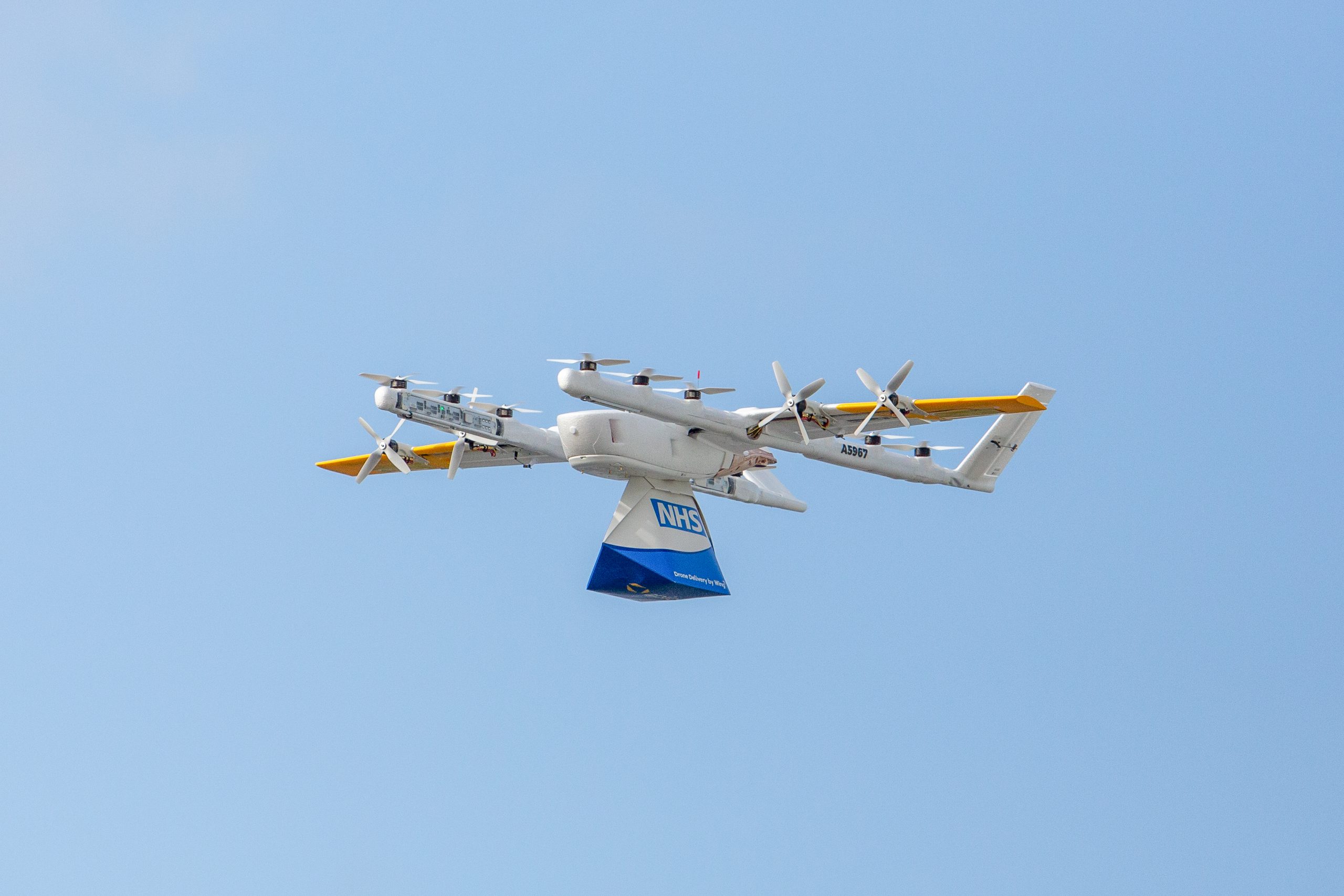
On-demand medical drone deliveries between Guy’s and St Thomas’ NHS Foundation Trust hospitals in central London, operating in airspace essentially between The Shard and the London Eye, are supporting faster, better patient outcomes thanks to a broad collaboration between Guy’s and St Thomas, healthcare logistics company Apian, and Wing, as well as the UK Civil Aviation Authority (UK CAA) and NATS, the UK’s air traffic control provider.
By being able to send pathology samples on demand and by air between Guy’s and St Thomas’ rooftops – rather than the crowded streets of London via vans or motorbike – blood samples arrive for analysis in two minutes instead of an average of 30 minutes or more. This significantly reduces the time it takes for these samples to be tested, and results provided – a critical metric for these particular patients who are undergoing surgery and are at high risk of bleeding disorder complications.
Wing’s ability to safely, efficiently, and effectively deliver these high-impact and time-sensitive deliveries comes from having built its operational foundations in residential deliveries – a use case that centers around safety alongside convenience, speed, precision, and the gentle delivery of goods. With over 450,000 commercial deliveries completed on three continents, leveraging systems designed for highly automated beyond visual line of sight (BVLOS) operations, the translation to hospital-to-hospital medical deliveries was a logical next step.
Medical deliveries, especially for samples awaiting analysis, need to be convenient for the hospital staff, precise in flight, and pristine upon arrival. In these operations, four simple steps take place to accomplish exactly that: 1) a transport of blood samples is ordered via Guy’s and St Thomas’ pre-existing records system and packed; 2) a hospital porter brings the package to the Wing “Nest,” which is already located at the hospital; 3) the package is securely loaded onto the drone; and 4) the drone flies to St Thomas’ rooftop in two minutes and lowers the package at the delivery spot. In minutes, it can be signed into a lab and processed.
The Guy’s and St Thomas’ hospitals operations are taking place through the support from the UK CAA and the regulatory foundations they developed to enable the London Health Bridge trial. Leveraging the available Temporary Reserved Area (TRA) pathway provided by the Civil Aviation Authority and coordinated with NATS, the drones operate within designated airspace between the two hospitals. It represents a significant development from the UK’s airspace authorities to approve BVLOS operations in one of the most urban environments in the world: a clear indication of the readiness of the industry to integrate into our daily lives.
All flights are overseen by a Pilot in Command and leverage Wing’s highly automated drones that plot their own flightpath within the approved service area. Flying at approximately 70m or about 230 feet above ground level and at up to 100km/h or 60 mph, the drones spend just under four minutes round trip in the air.
To reach this point, the London Health Bridge partners worked to rigorously evaluate the safety of the operations, build a program that would have an immediate positive impact on healthcare logistics, and collaborate in-depth with other airspace stakeholders and the local community. Wing’s lightweight aircraft and infrastructure, highly automated system, and proven operations were uniquely positioned to bring this work to reality.
Beyond the direct patient and provider advantages, drone delivery also supports environmental benefits. Compared to non-electric cars, drones reduce CO2 emissions by up to 99%, alleviating congestion in central London and supporting efforts to reduce emissions. With the NHS accounting for 4% of England’s greenhouse gas emissions, this is an opportunity to help support the best possible patient care while improving sustainability.
These operations mark a landmark achievement in BVLOS automated drone operations in a major urban area. Being able to deliver blood samples on a routine basis for Guy’s and St Thomas’ over a congested city is a key step forward in the opportunity to bring the benefits of drone delivery to urban communities. Each sample carried by air enables an opportunity to expedite and improve a patient’s outcome. Flying within London’s complex airspace demonstrates the potential for safe, routine drone integration as well as a path for scalable drone services in UK airspace.