






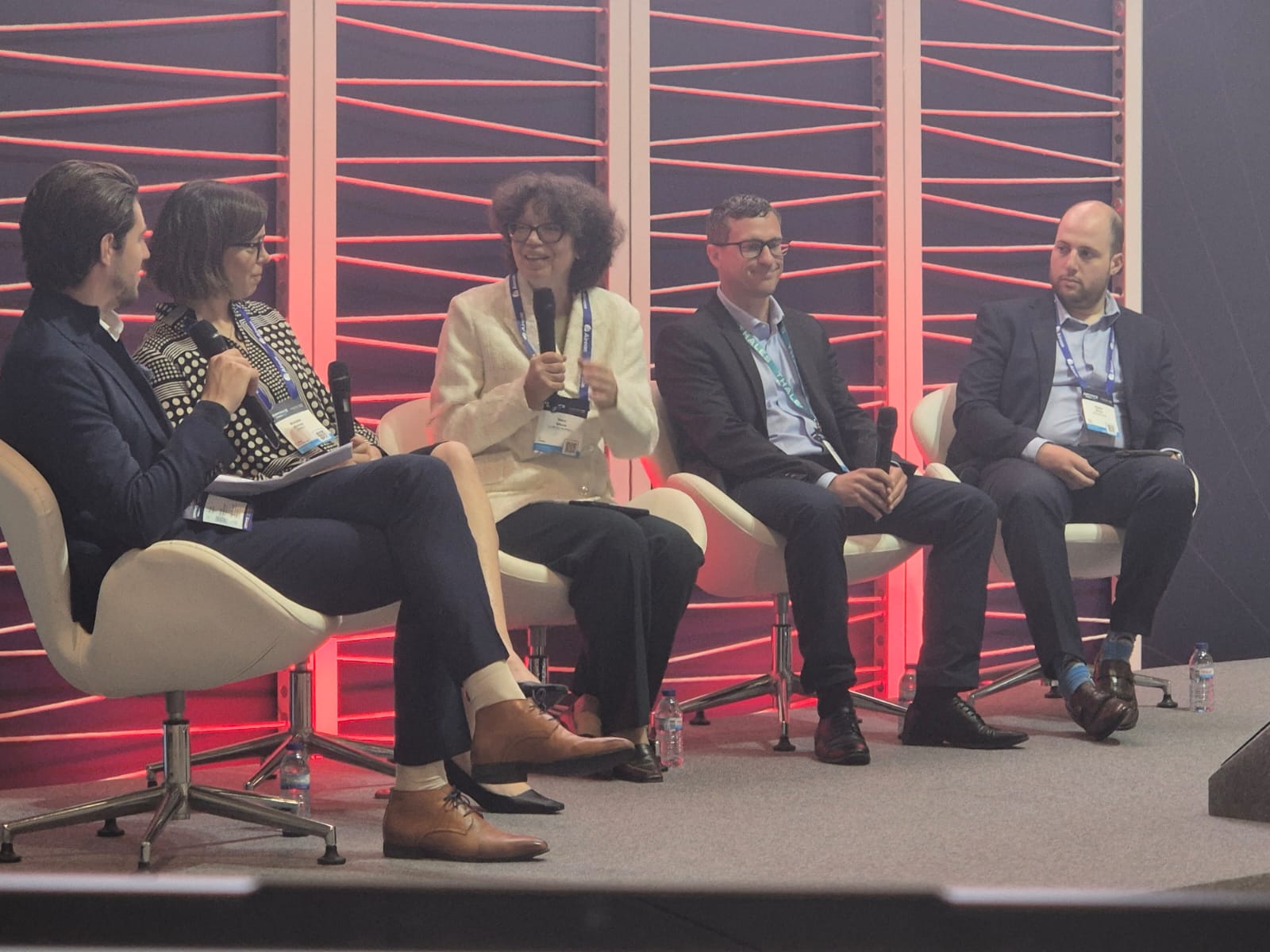
Sustainability was in focus as a high-level panel discussed the impact of persistent contrails.
At the Perspectives on ANSP-led Contrail Mitigation session, it was noted that
contrails are formed in certain temperature and humidity conditions. As some 5% of trajectories cause 80% of contrail impact, there is an opportunity for air navigation service providers (ANSP) to make a significant contribution to overall climate management.
The positive news is that the contrail problem is eminently solvable, and the panel predicted short-term gains. But there are challenges. First, the trick will be in predicting which trajectories will cause contrails. Although a lot of work has been done and knowledge has improved considerably, predicting contrail formation and the impact of those contrails is an inexact science as yet.
More aircraft monitors will help to provide the necessary data, but there is a need to act quickly and move from concept to demonstration. Individual flights have taken place but there is a need to scale up and routinely predict and avoid contrail formation.
Second, and more crucially, contrail mitigation could have a significant impact on airspace management. Airlines and ANSPs need to agree on a procedure once a prediction of contrail formation has occurred. Communication and responsibility must be clear. And at all times, safety and capacity must be maintained. There is also a trade-off to consider as avoiding contrail formation may mean a longer flight, meaning more fuel burn and emissions.
All the above suggests that any solution should be ANSP-led. ANSPs have a much better picture of traffic flow than an individual airline pilot and will be better able to make strategic decisions.
It was concluded that contrail mitigation was an integral part of sustainable aviation and hence part of aviation’s license to grow. Solving the contrail problem is possible, which would greatly assist the net-zero carbon emission future envisaged by the industry. But it will take a concerted, collaborative approach and there is a pressing need to bring the various actors together to find the right solution for the industry. Studies are ongoing and a roadmap leading to action will be essential.
To70 proposes to host a panel to explore the potential of ANSP-led contrail mitigation strategies during periods of surplus airspace capacity. The objective is to enable a forward-looking discussion on practical solutions, emphasizing the role of ANSPs in mitigating contrails, which are a key contributor to aviation-induced climate effects.
Though airline-led contrail mitigation initiatives have recently gained prominence, To70 identifies ANSP-led solutions to be an underexplored area. Through our understanding of current policy developments and discussions with CANSO taskforce on contrails, we have gained a clear understanding of the topic. To address this gap, To70 proposes to host a panel where stakeholders will discuss what possible solutions exist for ANSPs to mitigate contrails, as well as sharing their concerns and opportunities.
By bringing together these experts, To70 aims to bring forth the potential of ANSP-led initiatives for contrail mitigation, suggest what solutions are possible in the future, and discuss their possible concerns and benefits; while showcasing the topic in an engaging style for participants and public.
Panellists
David Antonello
Thales Airspace Mobility Solutions
Product Line Manager Air Ground
Ilona Sitova
EUROCONTROL Maastricht Upper Area Control Centre (MUAC)
Senior Aviation Sustainability Expert
Matteo Mirolo
Breakthrough Energy, Arcadia eFuels
Head of Contrail Policy and Strategy at Breakthrough Energy and Senior Policy Advisor, Arcadia eFuels
Michelle Bishop
CANSO
Director Programmes
Vincent de Haes
To70 Aviation
Senior Sustainable Aviation Consultant