









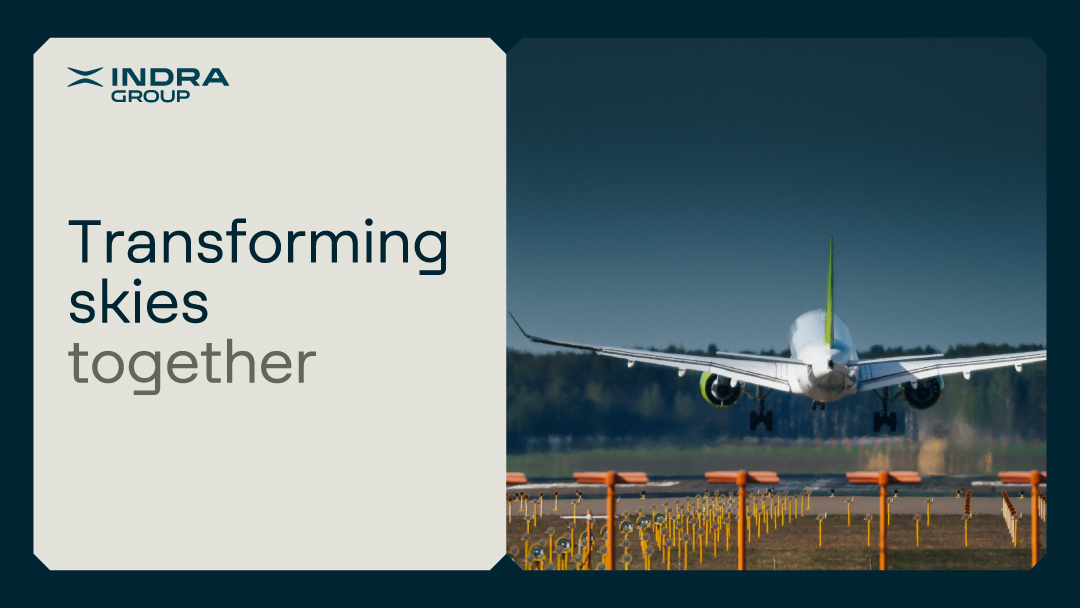
Indra, a global leader in the development of Air Traffic Management systems, is at the forefront of modernising airspace operations and shaping the future of aviation with solutions that enable safer, more efficient, and sustainable skies. With decades of expertise and a strong commitment to innovation, Indra is transforming the way air traffic is managed, bringing cutting-edge technology to the skies and enabling smarter, more connected airspaces.
As part of this vision, digital towers represent a significant leap forward in air traffic management. These innovative systems are not just a technological upgrade; they are a paradigm shift that redefines the very way we manage airports and air traffic. Moving away from traditional control towers, digital towers empower air traffic controllers with enhanced, real-time situational awareness through the use of high-definition cameras, sensors, and integrated data.
The potential of digital towers goes far beyond simply replacing traditional structures. They offer a more connected and efficient way of managing air traffic, allowing controllers to monitor multiple airports from a single, remote location. This means that airports—whether bustling international hubs or quieter regional airfields—can benefit from a unified, streamlined air traffic management system that enhances safety and operational efficiency.
The Power of Remote Control: A New Era in Air Traffic Management
One of the most compelling aspects of digital towers is their ability to provide remote control. This revolutionary capability allows airports to operate more flexibly and cost-effectively. No longer is there a need to build and maintain multiple physical towers at each airport; instead, a single control center can manage operations at several airports simultaneously, optimizing resources and improving the overall air traffic flow.
Indra is a leader in implementing digital tower solutions, providing airports with the tools they need to meet the growing demands of the aviation industry. By integrating AI, sensors, and real-time data, Indra’s digital towers offer an unparalleled level of situational awareness. Controllers are no longer confined to a limited view from a single tower; instead, they can access comprehensive, high-definition views of the entire airfield and its surroundings, ensuring they are always in control, regardless of their physical location.
This technology also enhances the safety and efficiency of air traffic management. The integration of advanced analytics and AI-driven systems helps identify potential risks before they escalate, reducing human error and allowing controllers to respond to incidents with greater speed and accuracy. From tracking aircraft movements to monitoring ground operations, digital towers provide real-time data that helps make informed decisions, ensuring smoother, safer air traffic operations.
A Cost-Effective and Scalable Solution for Airports
Digital towers also offer significant cost savings for airports. The cost of building and maintaining traditional control towers is substantial, especially for smaller airports or those with fluctuating air traffic volumes. With digital towers, these costs are dramatically reduced. Airports can centralize operations and scale their air traffic management services without the need for additional infrastructure. This approach allows them to adapt quickly to changing demands, increasing capacity without incurring unnecessary costs.
Furthermore, digital towers offer remarkable flexibility. Whether it’s a regional airport that needs to monitor air traffic during peak periods or a large international hub that requires high-traffic management, digital towers can be easily scaled and adapted to fit the needs of any airport. Indra’s digital tower solutions are designed with this flexibility in mind, ensuring that airports of all sizes can benefit from the same level of advanced technology and operational efficiency.
Driving Innovation with AI and Advanced Technologies
Artificial intelligence plays a central role in the functionality of Indra’s digital towers. AI-driven systems help air traffic controllers monitor and manage air traffic with unprecedented accuracy. AI can identify anomalies in aircraft configurations, such as issues with landing gear or flaps, and immediately notify controllers, allowing them to take prompt action. Additionally, AI-powered vision systems autonomously track aircraft, vehicles, and personnel, further enhancing security and operational efficiency.
Indra is also introducing a state-of-the-art “A-SMGCS Integrated Digital Remote Tower Platform” that will create a new paradigm of tower control operations in large airports by blurring the border between head-up and head-down activities. This innovation combines traditional air traffic control practices with cutting-edge digital technology, offering controllers a more intuitive and efficient workflow, which significantly enhances operational capabilities.
As the aviation industry moves toward greater automation, AI and other advanced technologies will continue to play a pivotal role in shaping the future of air traffic management. Indra is committed to leading this technological transformation, helping airports across the globe leverage the full potential of digital towers to improve safety, increase capacity, and reduce costs.
A successful Global Impact
Indra’s impact on the global aviation industry is clear, with digital towers already in operation at several key airports around the world. The company’s collaboration with Budapest International Airport is a prime example of how digital towers are revolutionising air traffic management. In this project, Indra helped implement a state-of-the-art system that combines advanced camera technology, AI, and surface movement systems with a fully integrated A-SMGCS digital tower system to provide real-time situational awareness and improve operational safety.
In Norway, the NINOX program is the largest multi-airport digital tower projects in the world. Managed from a central control center, this initiative involves remote control of 21 airports, demonstrating the scalability and effectiveness of digital towers in handling complex, multi-airport operations.
Al-Ula International Airport in Saudi Arabia is operating fully remotely thanks to the digital tower system developed by Indra and SANS (Saudi Air Navigation Services), together with NERA, its technological solutions and services division. It is the first airport in the Middle East to incorporate this innovative technology, which enables controllers to manage take-offs and touchdowns via a control center located 550 kilometers from the runway in Jeddah with the highest levels of safety and efficiency.
The digital tower utilizes advanced technologies such as artificial intelligence, machine learning, and real-time data analytics to provide unparalleled control and monitoring capabilities.
Indra is one of the world’s leading global technology companies in air traffic, defence, and space, with over three decades of experience delivering innovative air traffic management (ATM) solutions in more than 90% of the world’s countries.
Visit Us at Airspace World
At Airspace World 2025, Indra will present its latest technological advancements designed to build tomorrow’s skies—more automated, connected, and environmentally responsible.
Visitors to booth #H1350/Hall 1 will have the opportunity to connect with Indra’s experts and experience live demonstrations showcasing its cutting-edge technologies.