






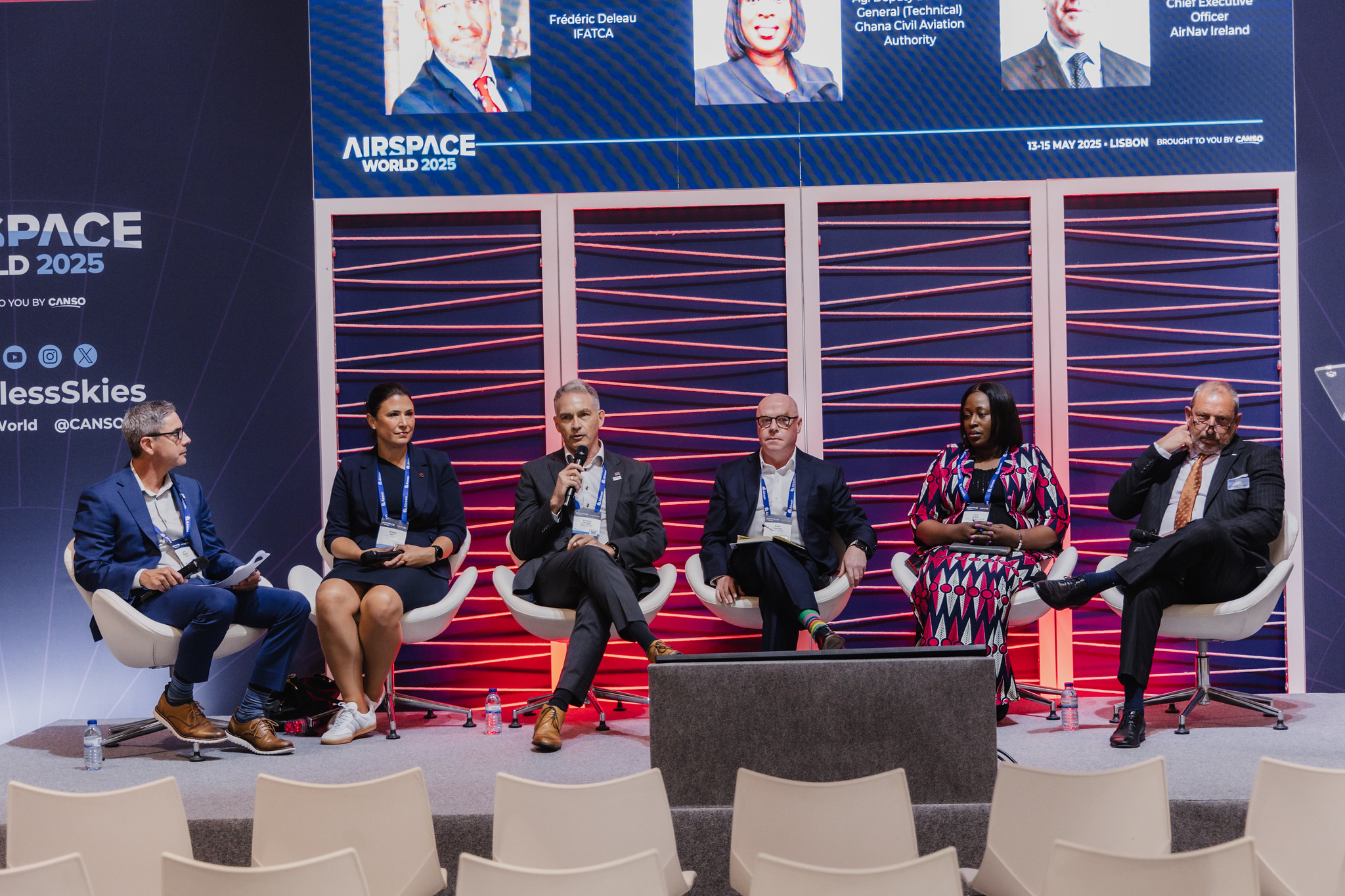
From strategic leadership conversations to in-depth operational discussions, CANSO’s high-level theatre programme at Airspace World 2026 will set the tone for the first half of the week — bringing together global leaders to address the realities of delivering modern, integrated airspace.
Proceedings begin on Tuesday morning with a flagship CANSO CEO Conversation in the Integra Theatre: ATM Modernisation Across Diverse Fiscal Models. Bringing together leaders from across the world, the session tackles one of the most fundamental — and often overlooked — challenges facing the industry: how transformation is funded in practice. With perspectives ranging from corporate ANSPs to state-funded systems, the discussion will explore how investment strategies, partnerships and financial frameworks are shaping the pace of modernisation.
This strategic lens quickly shifts into operational reality in the Frequentis Theatre with Operationalising Space Transport Operations in Shared Airspace. As launch activity accelerates, space operations are no longer theoretical — they are placing real-time demands on the airspace system. This CANSO-led panel brings together operators, regulators and ANSPs to explore how integration is already being managed today, and what must evolve to support safe, scalable operations.
Regional perspectives come to the fore in the Boeing Theatre with Airspace Modernisation in Latin America and the Caribbean – A Regional Path Forward. With ANSP leaders from across the region, the session explores how diverse capabilities and maturity levels can be aligned to deliver coordinated modernisation — from free route airspace and CNS upgrades to the integration of new entrants.
And Africa’s modernisation journey takes centre stage in CANSO Africa: Finding Pragmatic Approaches to Planning & Implementation – CATS and a Regional Path Forward. Bringing together industry leaders and stakeholders from across the continent, the session examines how harmonised planning, sustainable investment, transparent information-sharing and stronger collaboration can help accelerate progress towards seamless African skies. Using the CATS phases of Digital Information Sharing, Automation and Seamless Airspace as a framework, the panel will explore practical, scalable approaches that can be replicated across the region while continuing to improve today’s operational environment.
Safety and resilience remain central themes throughout the day. In the Integra Theatre, Working Together to Create a Collaborative Culture for Safe and Resilient Integrated Airspace examines how collaboration across civil, military and unmanned aviation stakeholders is essential to managing growing complexity. The session highlights the cultural, technological and regulatory shifts needed to move from reactive operations to proactive, system-wide resilience.
Digitalisation and collaboration take centre stage in the APAC-focused session How Digital Technology Can Enhance Regional Collaboration. Showcasing practical examples from across the region, the discussion explores how digital platforms are enabling more effective coordination, faster decision-making and scalable operational improvements.
The industry’s future workforce is addressed through Tomorrow’s Voices: Building the Talent and Innovation Ecosystem Aviation Needs, bringing together perspectives from across training, research and operations. The session highlights how attracting, developing and retaining talent — alongside supporting innovation ecosystems — is becoming a strategic priority for the sector.
On Wednesday morning, the strategic narrative continues in the Boeing Theatre with a second CANSO CEO Conversation: Strengthening the Skies – Technology, Resilience and Civil-Military Collaboration in a New Geopolitical Era. Against a backdrop of increasing traffic demand and geopolitical uncertainty, the discussion explores how ANSPs can scale capacity, enhance resilience and integrate military requirements while maintaining performance across the network.
Also on Wednesday morning, in the Frequentis Theatre, Artificial intelligence and automation will also be under the spotlight with the fireside chat, What Will Be AI’s Role in Air Traffic Management? Airspace World’s first all women panel of leading voices from across the ATM community, including operational, technology and human factors perspectives, will explore both the opportunities and challenges surrounding AI integration in aviation. From reducing controller workload and improving efficiency to questions around trust, safety and over-reliance on automation, the discussion will examine how the industry can strike the right balance between innovation and human expertise as AI becomes an increasingly prominent part of future airspace operations.
Together, these sessions form a coherent narrative — from funding and strategy through to operational integration, regional collaboration and workforce development — reflecting an industry moving decisively from ambition to implementation.
“What this first part of the programme shows very clearly is that transformation is no longer a theoretical discussion,” said Eduardo García, Manager Future Skies, CANSO. “We are seeing how different regions, operational environments and funding models are approaching the same challenge — how to modernise safely, sustainably and at pace. The value of bringing these perspectives together is in identifying what works in practice and how it can be scaled.”